
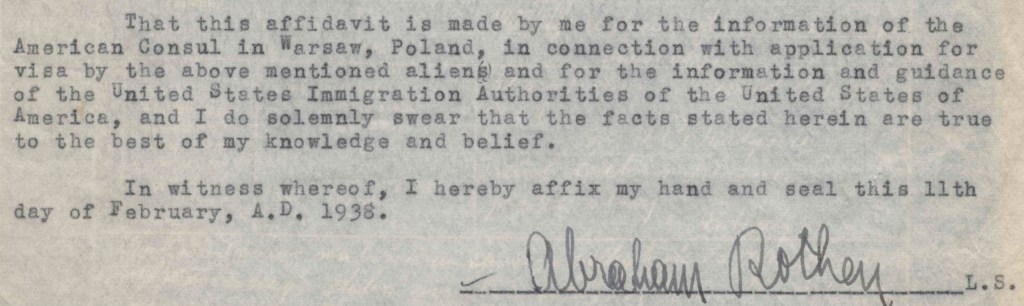
In my first blog, I discussed my interest in researching the visa file for the immigration of my grandfather, Max Faust, and his family. I was intrigued by the details (as seen above) of the visa information on the ship manifest stating that the Quota Immigrant Visas were issued by the US Consulate in Warsaw on August 16, 1938. I had sent a search request to the United States Citizenship and Immigration Services Genealogy Program in order to determine if a visa file still exists in the national archives. I have still not heard back from them.
The Immigration Act of 1924 (aka Johnson-Reed Act) limited the annual number of immigrants admitted from any country. This act was a further reduction than had previously been made by the Immigration Restriction Act of 1921. The Act set the quota to 2% of each nationality residing in the US at the time of the 1890 census. The annual quota for Poland was 5,982 for the years 1925 to 1929, and 6,524 for the years 1930 to 1939. Only 6,512 immigrants were admitted from Poland under the quota system from July 1, 1938 to June 30, 1939. Max, Miriam, Helen and Annette Faust held four of those coveted 6,512 quota immigration visas. I want to know how my grandfather was fortunate enough to obtain issued visas for his family one year before Germany invaded Poland. It must have been no easy task. On July 1, 1938, a conference was held in Evian-les-Bain, France to respond to the growing Jewish refugee situation in Europe. The conference was attended by representatives from 32 countries. While all countries all agreed that there was a crisis, most including the United States refused to accept more refugees. A current exhibition at the Museum of Jewish Heritage in New York entitled Against All Odds: American Jews and the Rescue of Europe’s Refugees 1933-1941 explains the difficulty involved in immigrating from Europe in the late 1930s (Thank you Tammy Hepps for the letting me know about the exhibit). Successful immigrants had the backing of wealthy or well connected sponsors. Economic depression, rising anti-semitism, and xenophobia were reasons given in the exhibit for the lack of enthusiasm to raise quota limits for Jewish refugees seeking to leave Eastern Europe. The exhibit also conveys the extensive documentation required by both the immigrant and their sponsor. The Hebrew Immigrant Aid Society (HIAS) provided the following information sheet regarding the documents required for visa application.
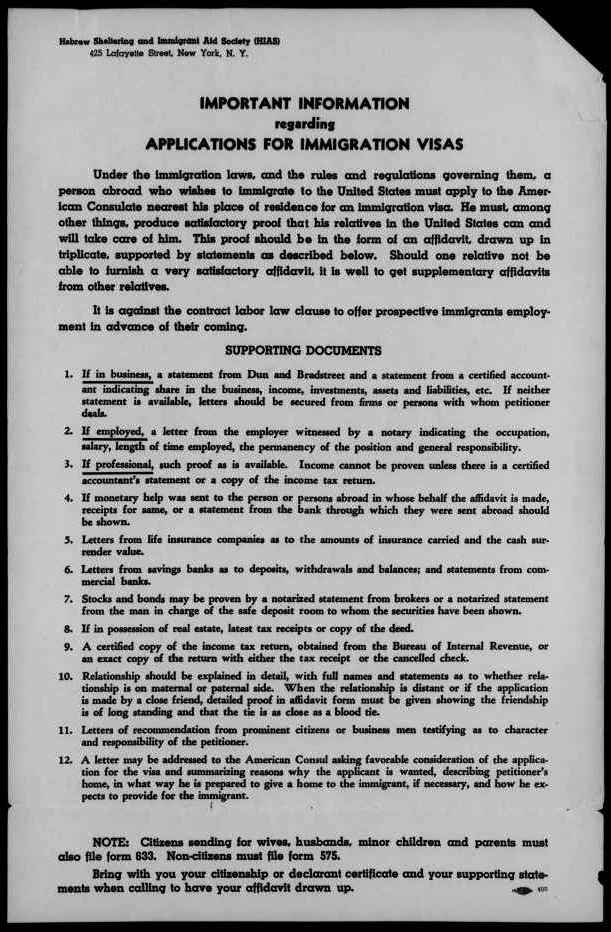
This guide from HIAS states the a person wishing to immigrate to the United States must apply for an immigrant visa at the nearest American Consulate. In addition to the application, the applicant must also provide supporting documents from a relative in the United States who was willing to financially support the immigrant so that he is not a ‘public charge.’ The following documents were recommended by HIAS to increase the chances that an application would be looked on favorably.
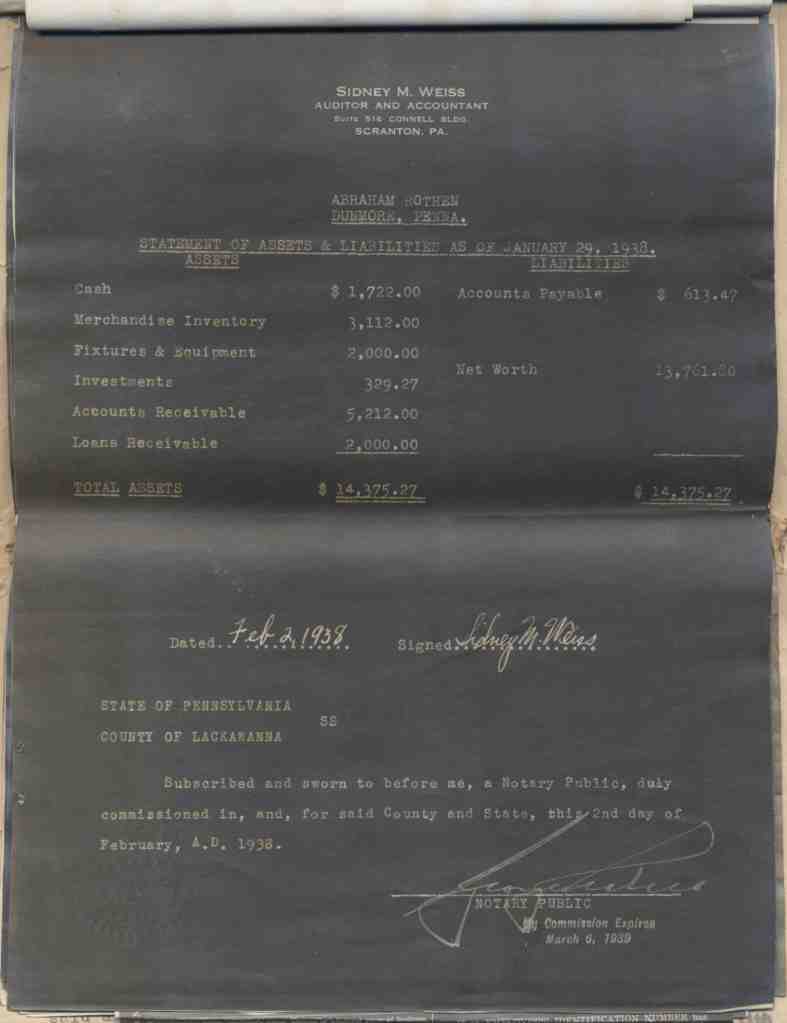
1. A statement from an accountant indicating share in business, income, investments, assets, and liabilities.
2. A letter from an employer with terms and description of employment.
3. Proof of professional income from an accountant or income tax returns.
4. Bank statements or receipts if monetary help was sent to the applicant.
5. Letters from life insurance companies describing terms and amounts.
6. Letters from savings and commercial banks describing activity and balances.
7. Proof of ownership of stocks and bonds from broker.
8. Proof of ownership of real estate.
9. Personal income tax returns.
10. Full explanation of the relationship to applicant.
11. Letters of recommendation from prominent citizens or businessmen.
12. A letter from the sponsor summarizing reasons the applicant is wanted, and how the sponsor will provide a home and support for the applicant.
Lastly, the HIAS guide concludes that the sponsor providing the affidavit has to be a citizen of the United States and documents showing citizenship need to brought when the affidavit is notarized.
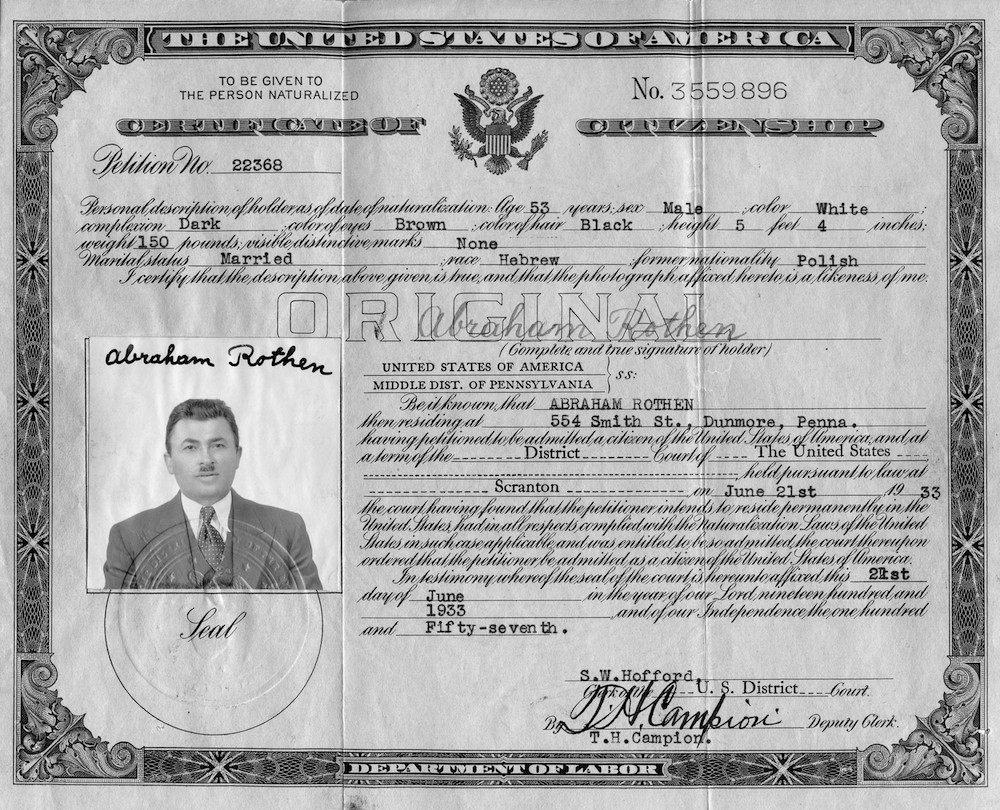
Abraham Rothen received his naturalization certificate on June 21, 1933 where he was living at 554 Smith Street in Dunmore, PA so he was well within eligibility to be the sponsor for Max Faust and his family by 1938. However, he was far from being a wealthy mogul nor was he politically connected to any governmental officials. What did it take for Abraham Rothen to increase the chances that Max Faust’s visa application would be be accepted?
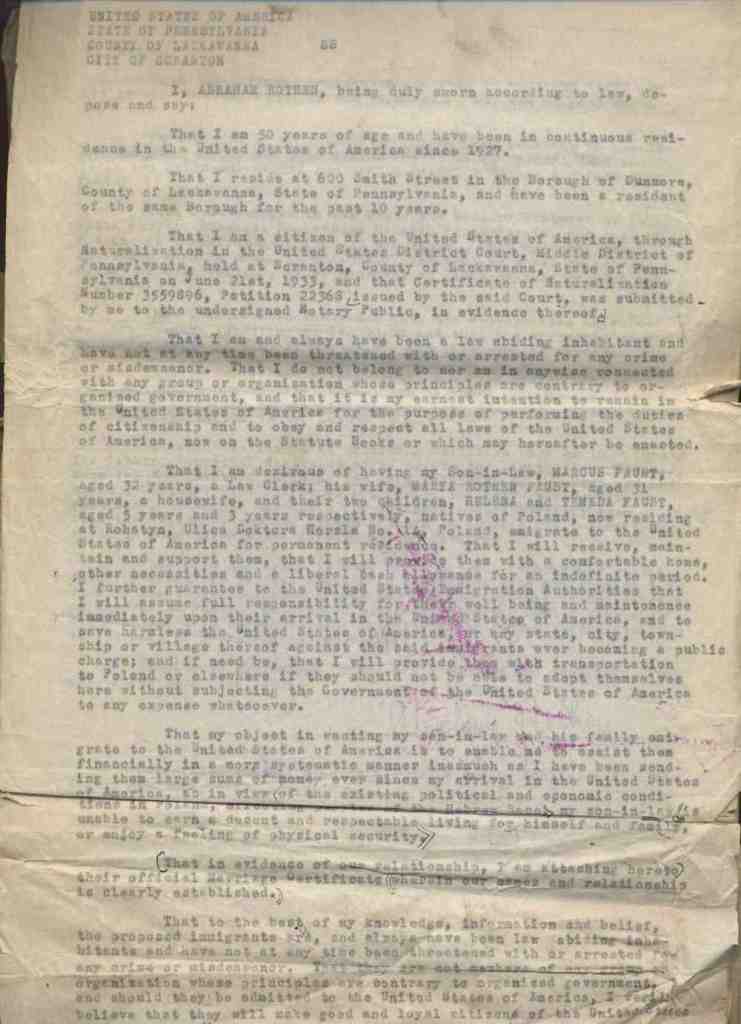
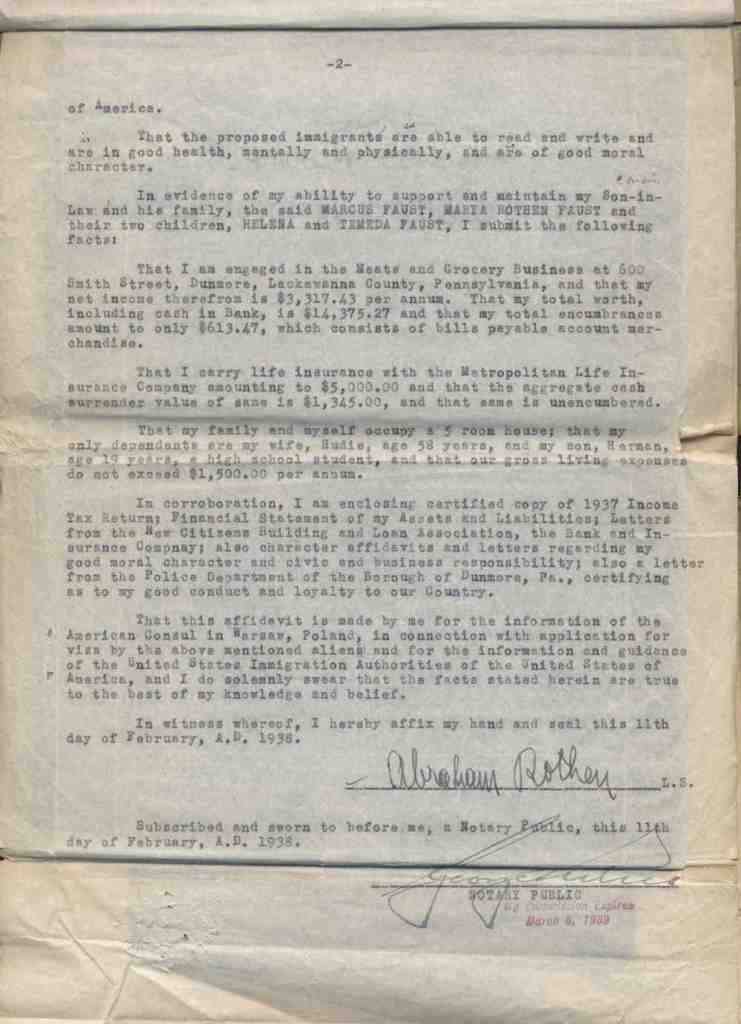
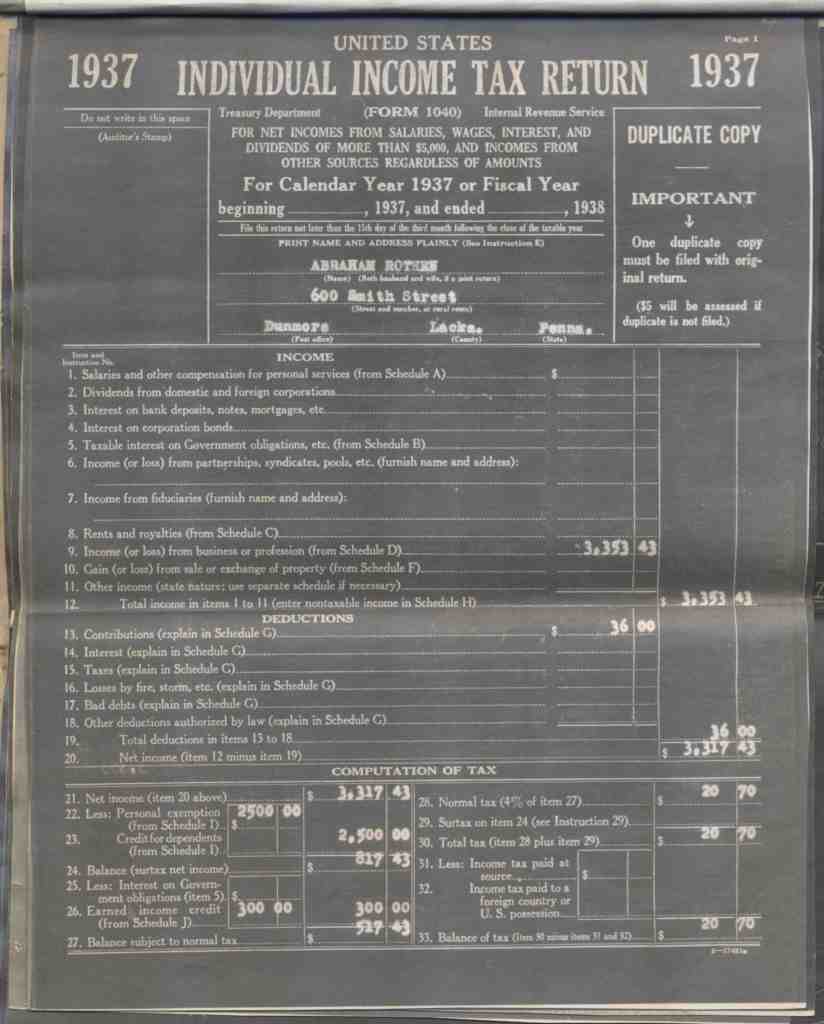
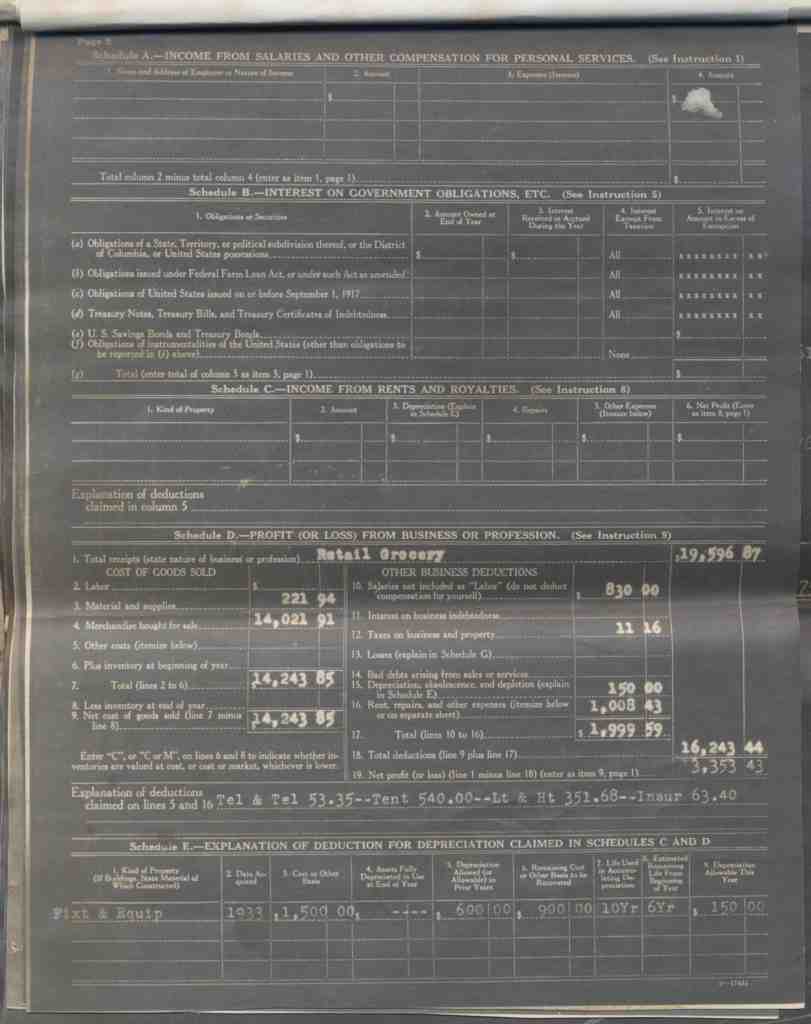
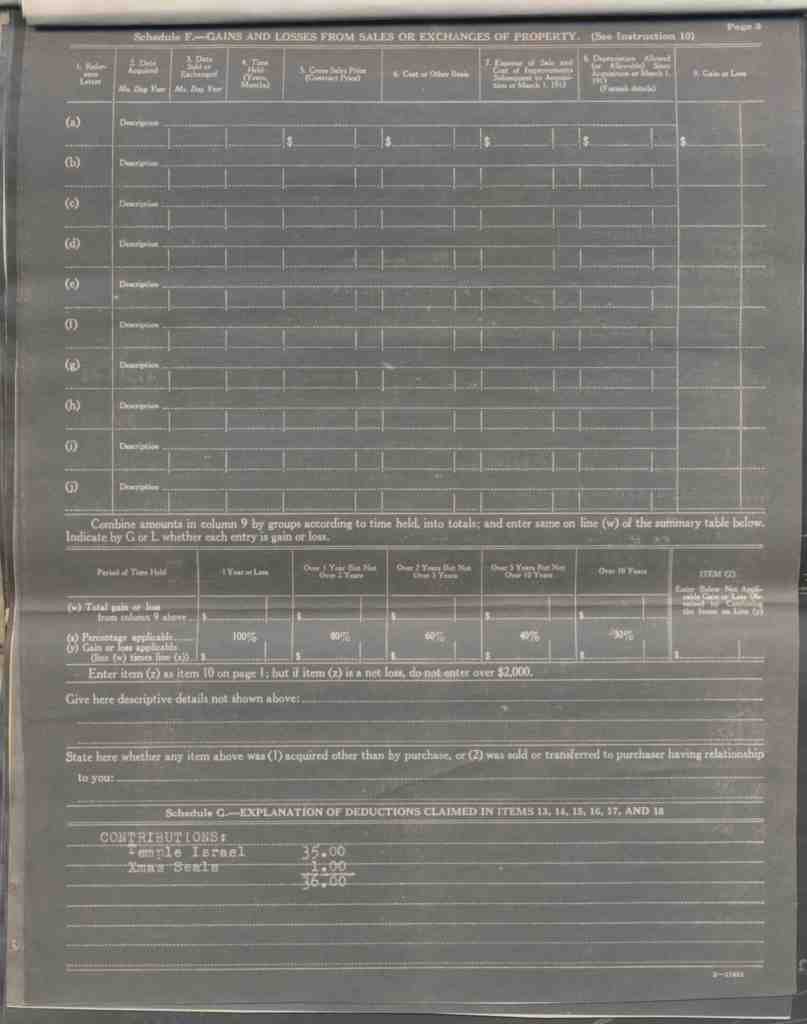
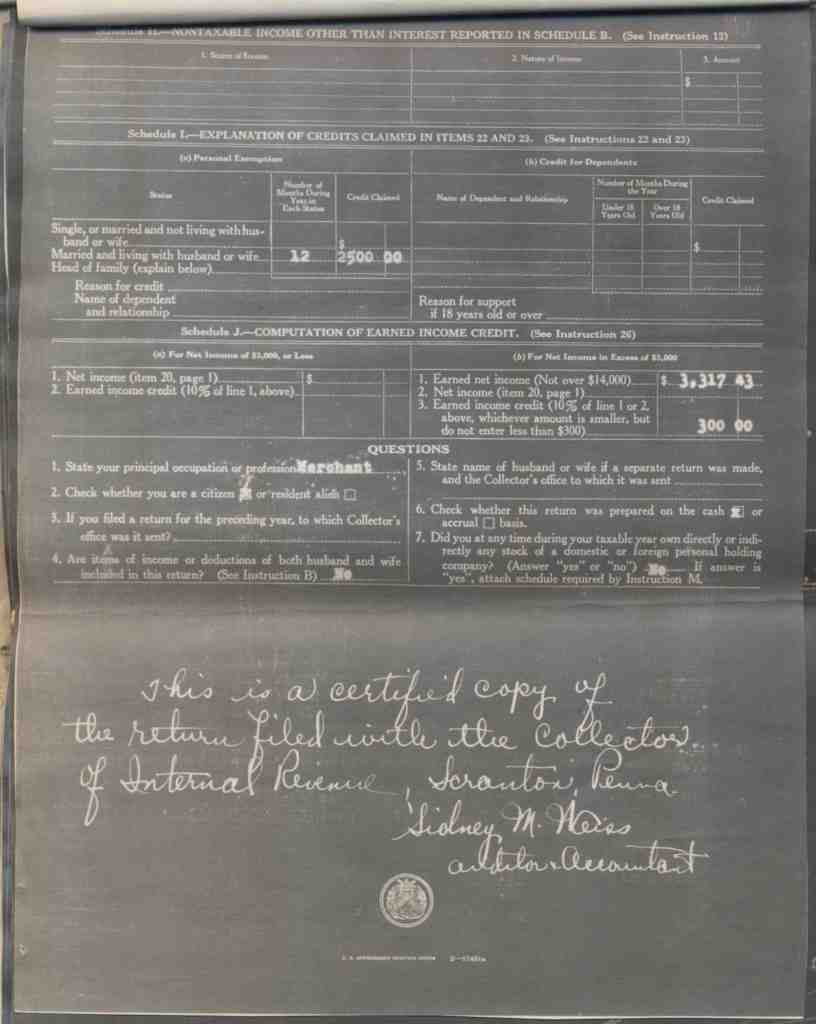
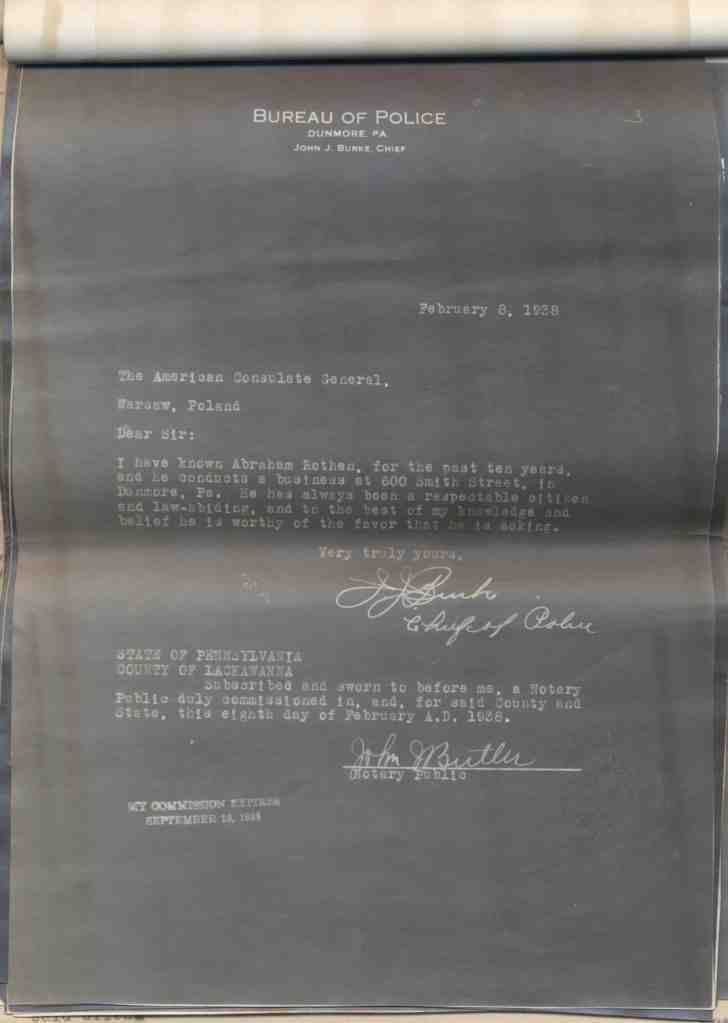
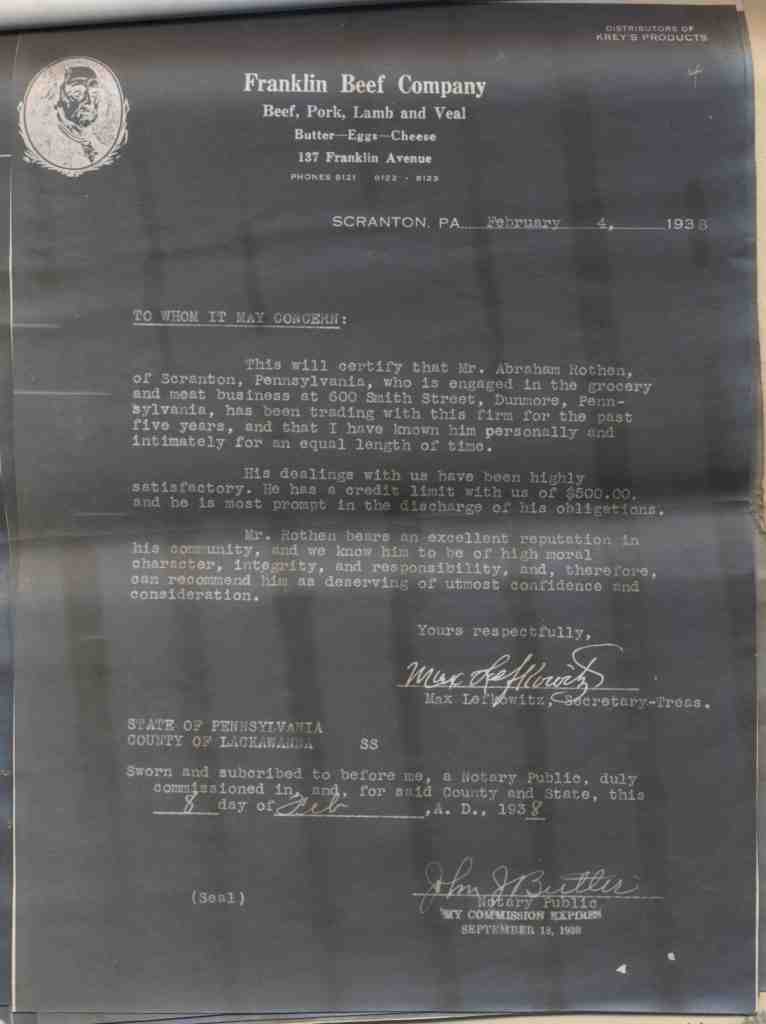
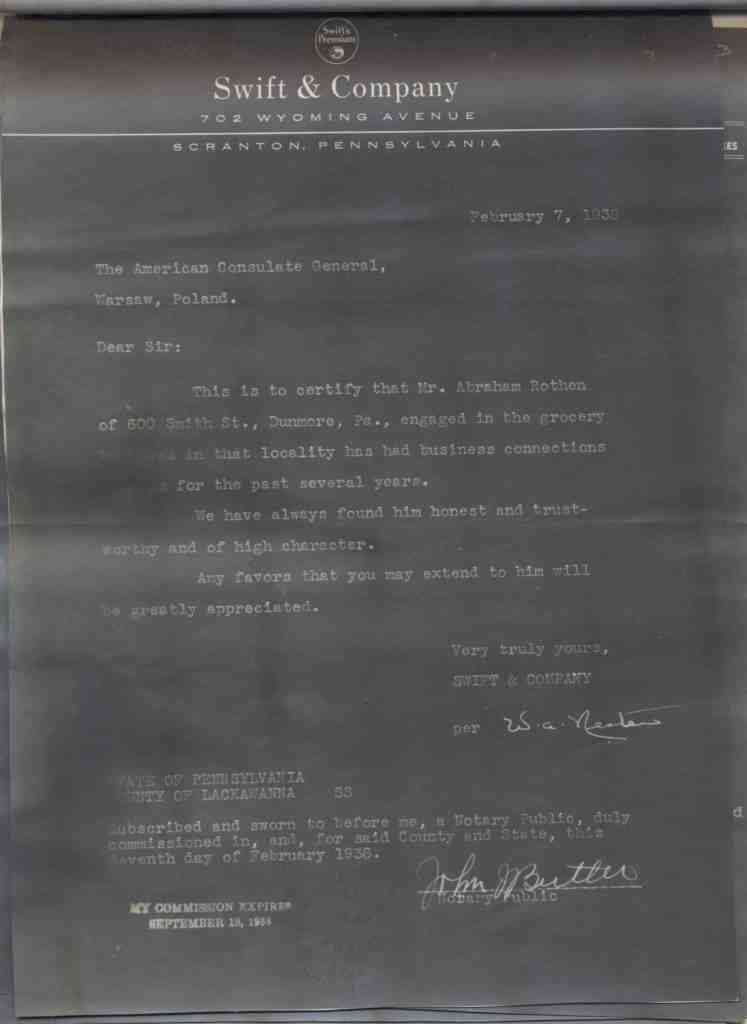
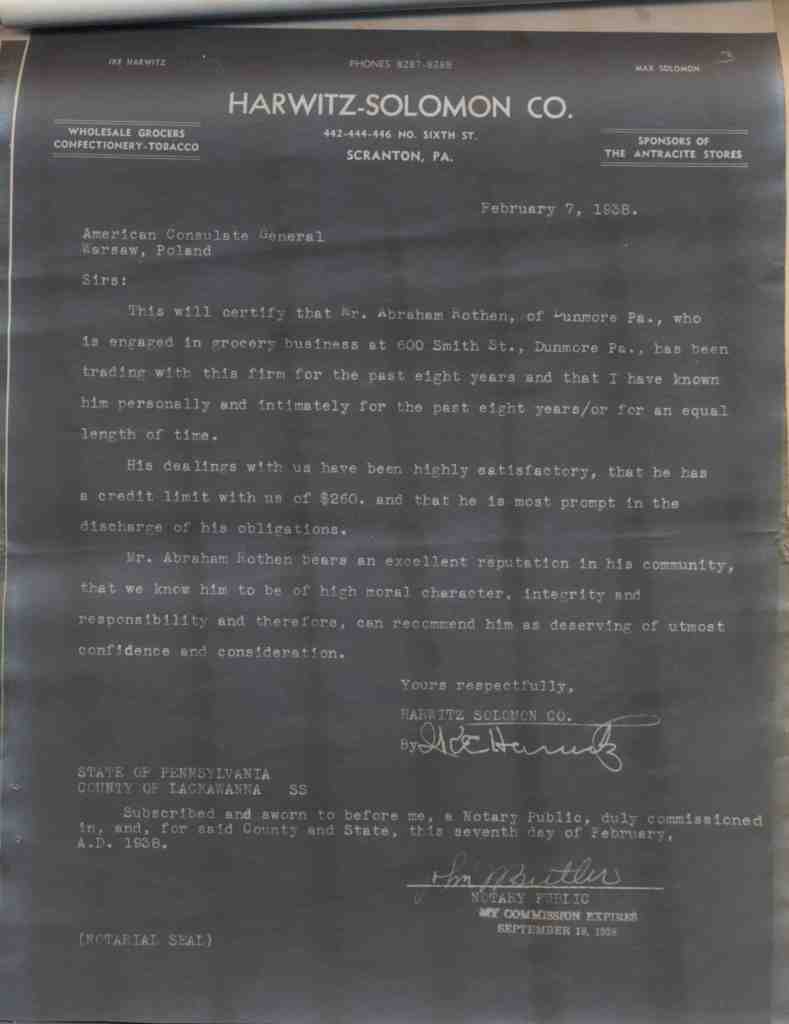
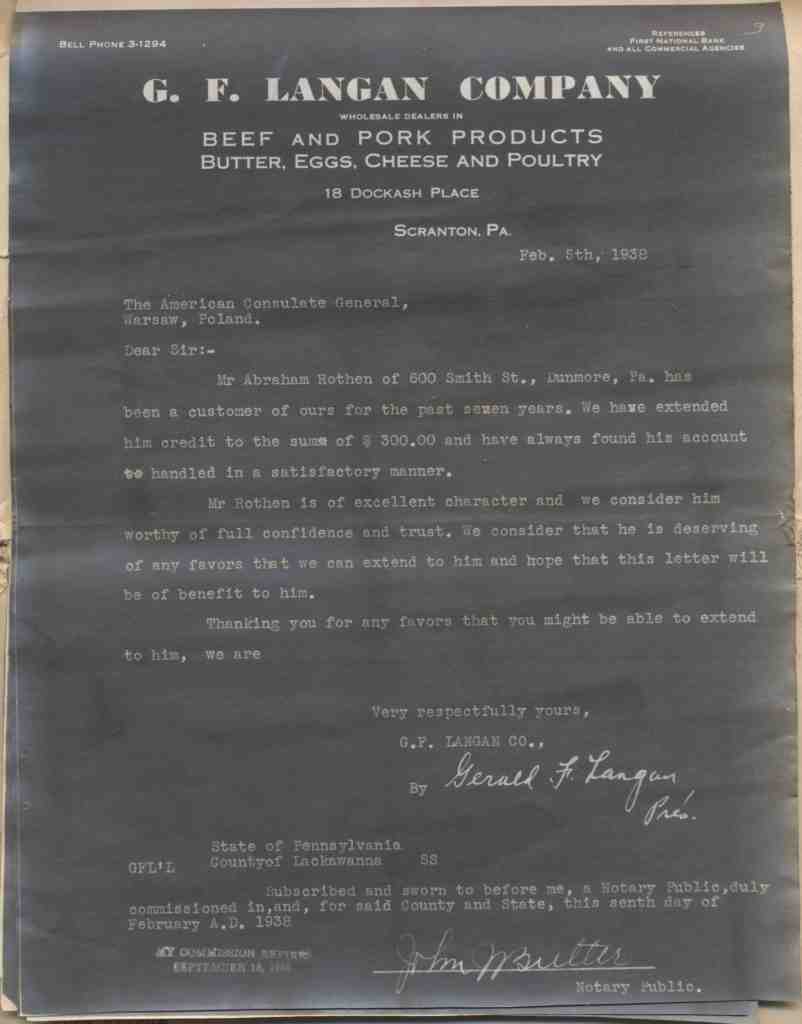
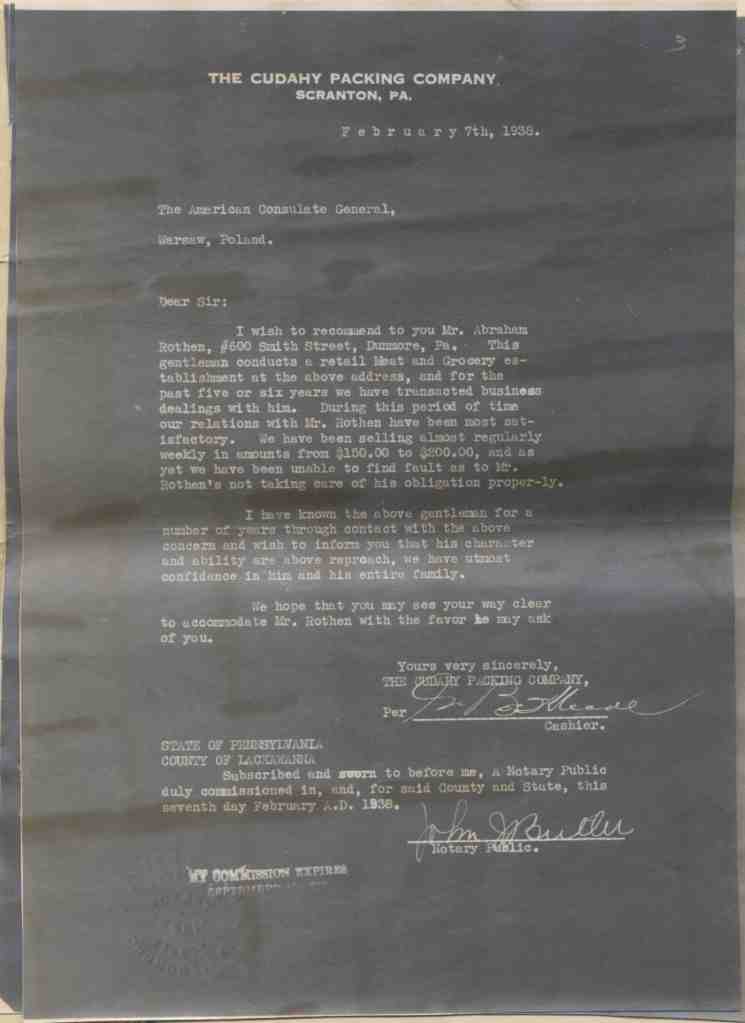
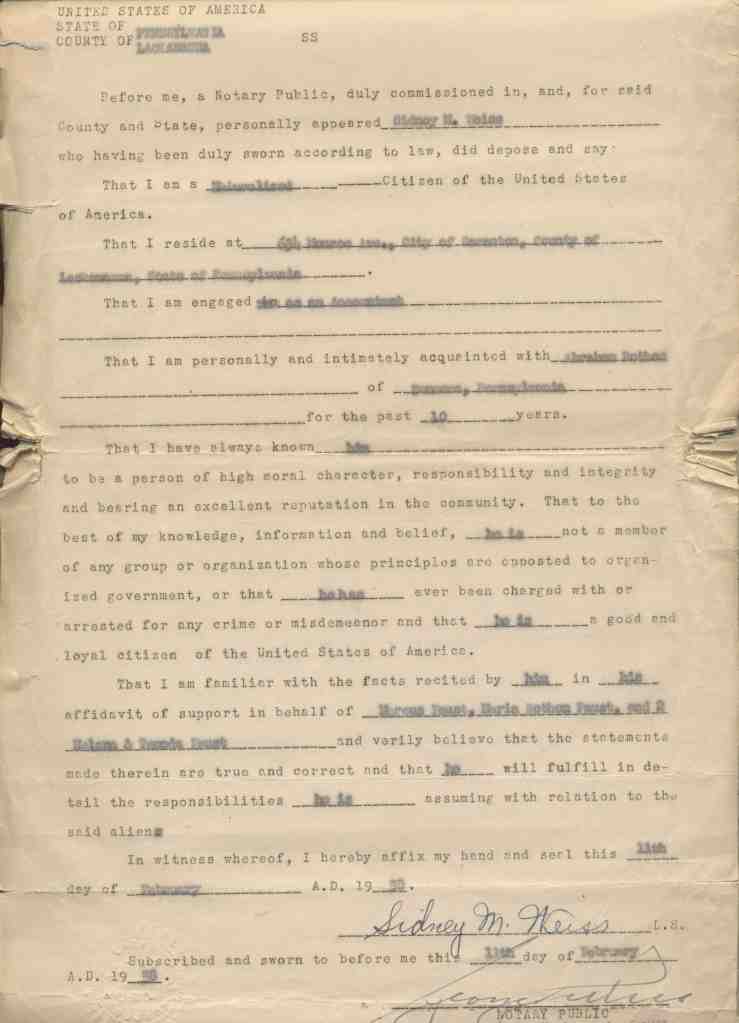
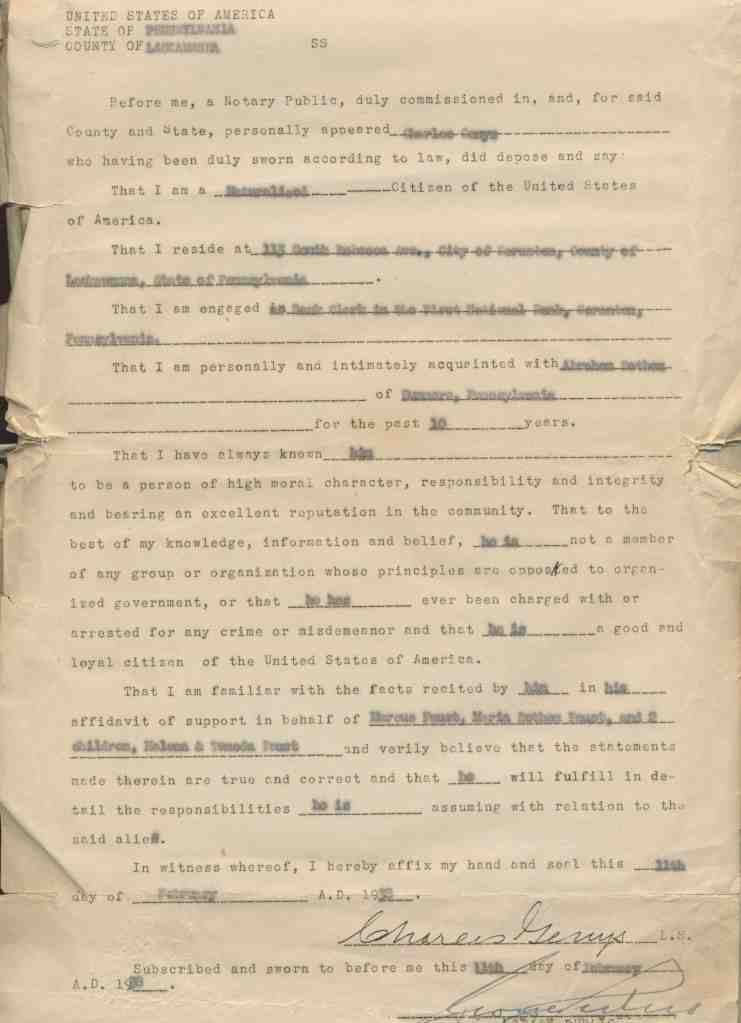
I returned back to the goldmine which is my mother’s basement. In one of the boxes storing my grandfather’s papers, we found what turned out to be the affidavit of support submitted by my great-grandfather, Abraham Rothen, on behalf of my grandfather. This bound cache of documents follows the HIAS instructions almost to a tee. I thought it best to discuss the documents he provided to the US Consulate in Warsaw seen below chronologically.
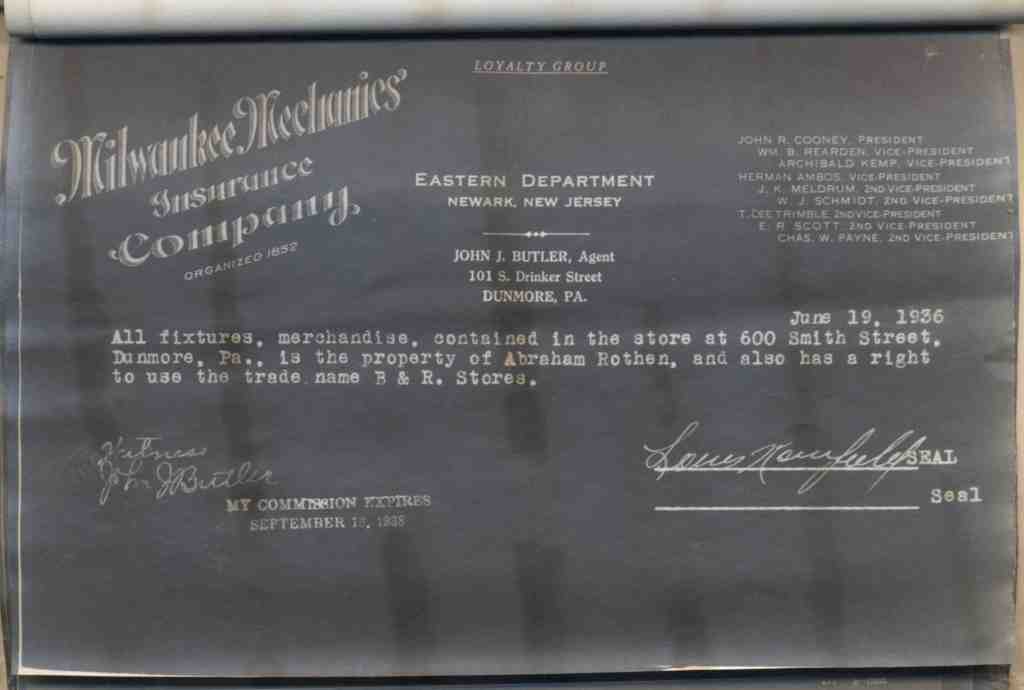

June 19, 1936
Louis Kornfeld (Abraham Rothen’s son-in-law), agent for the Milwaukee Mechanics’ Insurance Company, writes a letter certifying that all merchandise within the store at 600 Smith Street is the property of Abraham Rothen. Witnessed by John J. Butler.
January 19, 1938
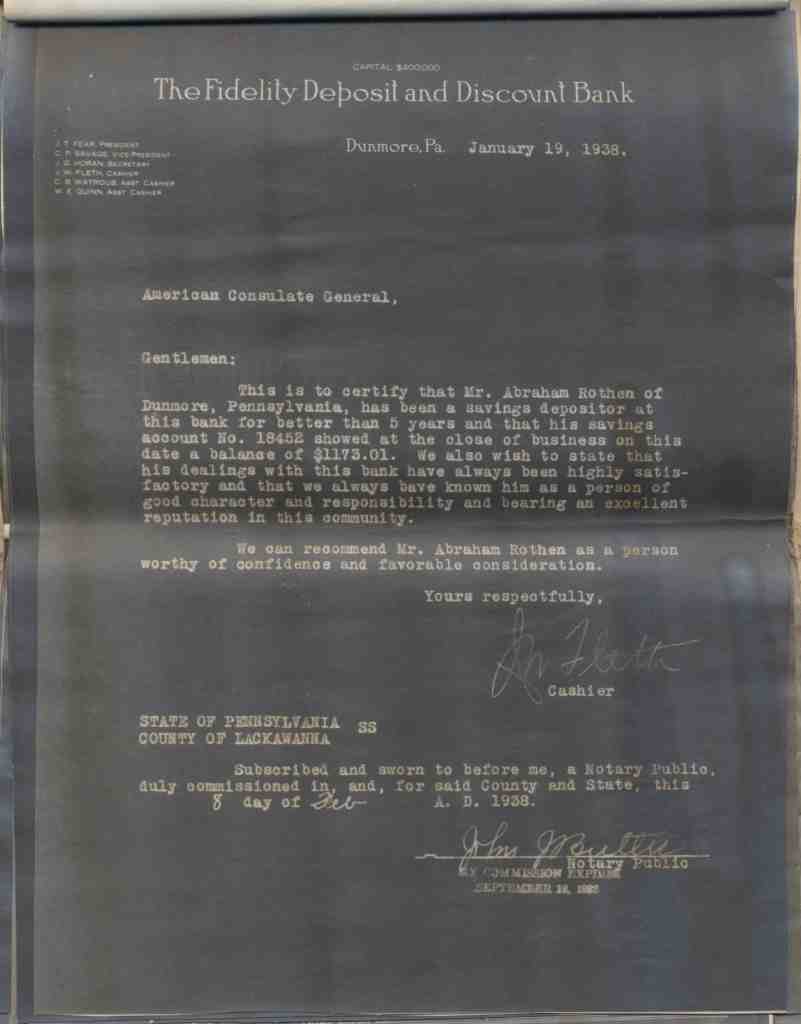
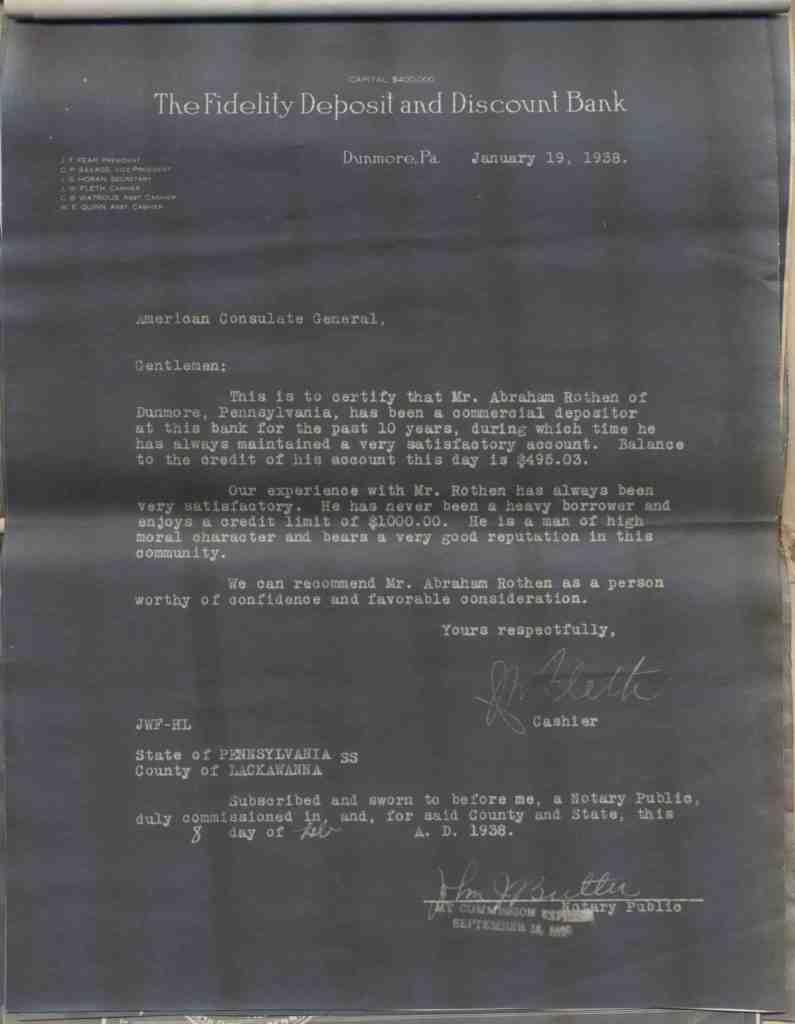
JW Felth, cashier for The Fidelity Deposit and Discount Bank of Dunmore, PA, writes two letters of recommendation for Abraham Rothen, one regarding his personal savings account and another for his commercial business account Both state his good credit, positive balance, “responsibility and excellent reputation in this community.” Both letters notarized Feb 8, 1938 by John J. Butler.
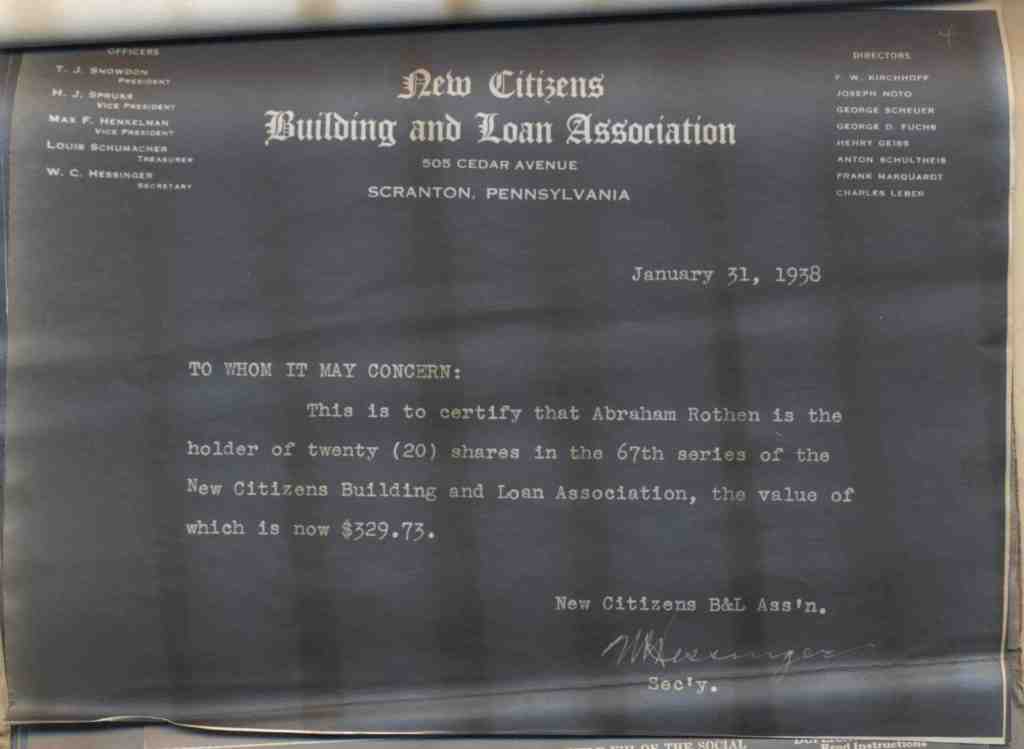
January 31, 1938
WC Hessinger, secretary of the New Citizens Building and Loan Association, writes a letter of recommendation for Abraham Rothen stating his share position in the company.
February 2, 1938
Sidney Weiss, accountant, writes a letter regarding the assets and liabilities of Abraham Rothen. Notarized the same day.
February 4, 1938
Max Lefkowitz, secretary-treasurer of the Franklin Beef Company, writes a wonderful letter of recommendation declaring Abraham Rothen as a person of excellent reputation, “high moral character, integrity, and responsibility, and therefore, … deserving of utmost confidence and consideration.” Notarized on February 8, 1938 by John J. Butler.
February 5, 1938
Gerald F. Langan, president of the G.F. Langan Company, writes a letter of recommendation for Abraham Rothen. Mr. Langan writes “Mr. Rothen is of excellent character and we consider him worthy of full confidence and trust. We consider that he is deserving of any favors that we can extend to him and hope that this letter will be of benefit to him.” Notarized on February 7 by John J. Butler.
February 7, 1938
Milton Jurkowitz of the Boston Candy Company writes a letter of recommendation for Abraham Rothen also noting his good character and fine reputation. Notarized the same day by John J. Butler.
February 7, 1938
Mr. Meade, cashier for the Cudahy Packing Company, writes a letter of recommendation for Abraham Rothen describing his ability to meet business obligations without fail. Notarized on same day by John J. Butler.
February 7, 1938
W.A. Nester(sp?) of Swift and Company writes a letter of recommendation for Abraham Rothen stating Abraham as honest, trustworthy, and of high character. Notarized on same day by John J. Butler.
February 7, 1938
Ike Harwitz, co-owner of the Harwitz-Solomon Company, writes a letter of recommendation for Abraham Rothen touting his good credit and excellent reputation in the community.
February 8, 1938
John J. Burke, Chief of the Bureau of Police for Dunmore, PA, writes letter of recommendation citing Abraham Rothen as a loyal and upstanding citizen. Notarized the same day by John J. Butler.
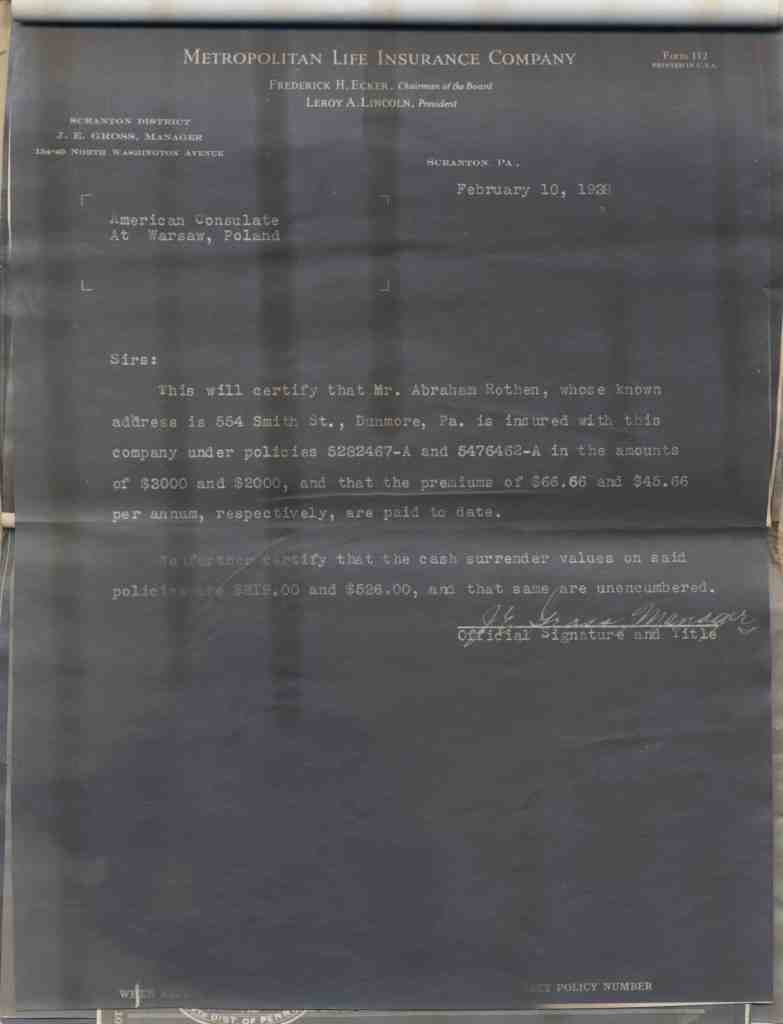
February 10, 1938
JE Gross, manager of the Metropolitan Life Insurance Company, writes a letter of recommendation for Abraham Rothen describing the terms and premiums of his life insurance policies.
February 11, 1938:
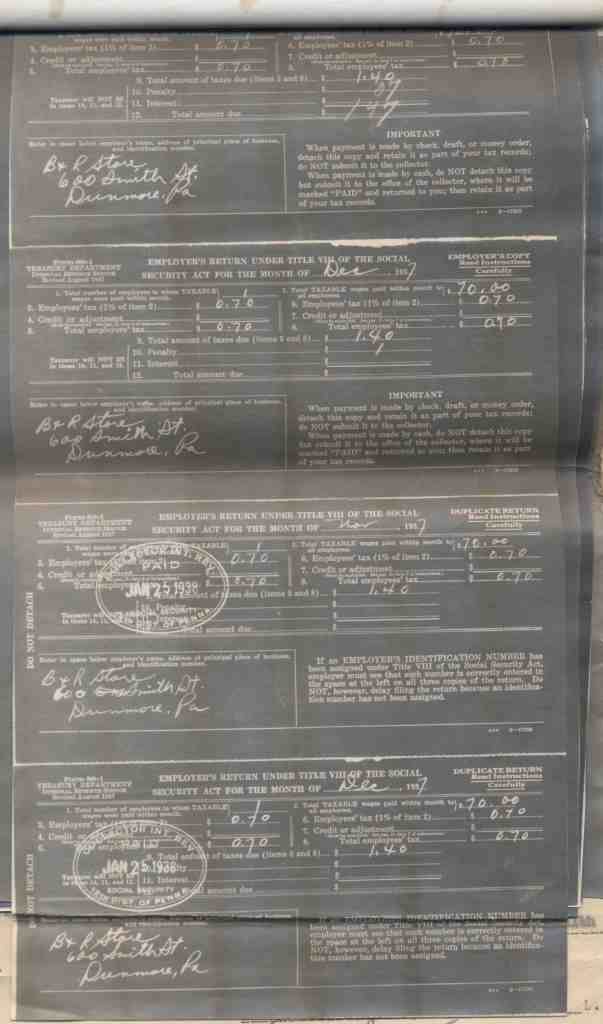
Abraham Rothen writes an affidavit of support where he states the status of his citizenship and loyalty to America, describes his relationship to Max Faust proven with enclosed marriage certificate, announces Max’s moral character, and vows to financially support the Faust family with descriptions of enclosed documents of proof including his 1937 personal and business income tax return. Sidney M. Weiss, accountant, and Charles Genys, a bank clerk, serve as witnesses to this affidavit. Notarized on same day.
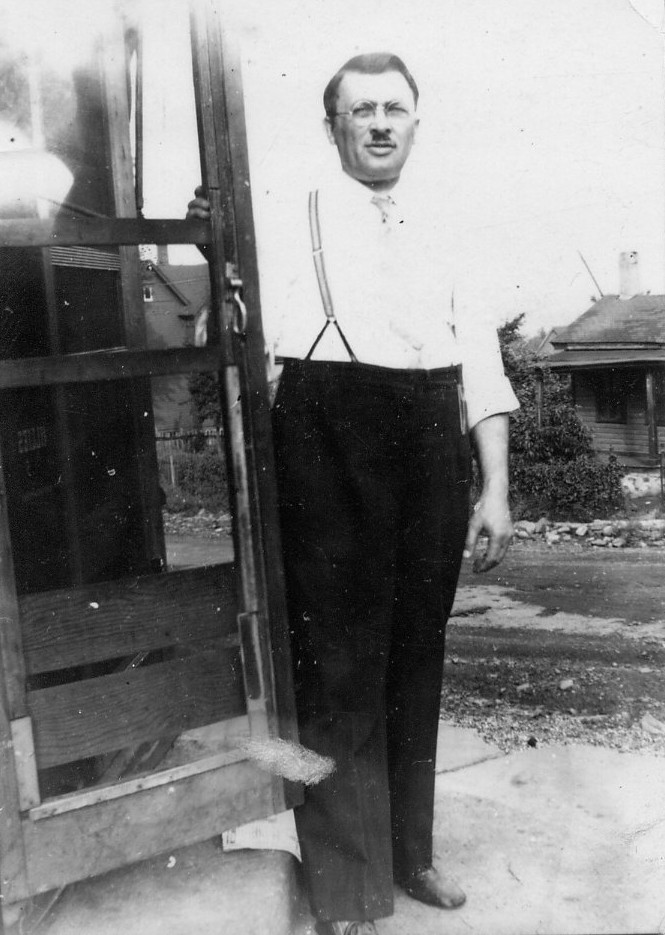
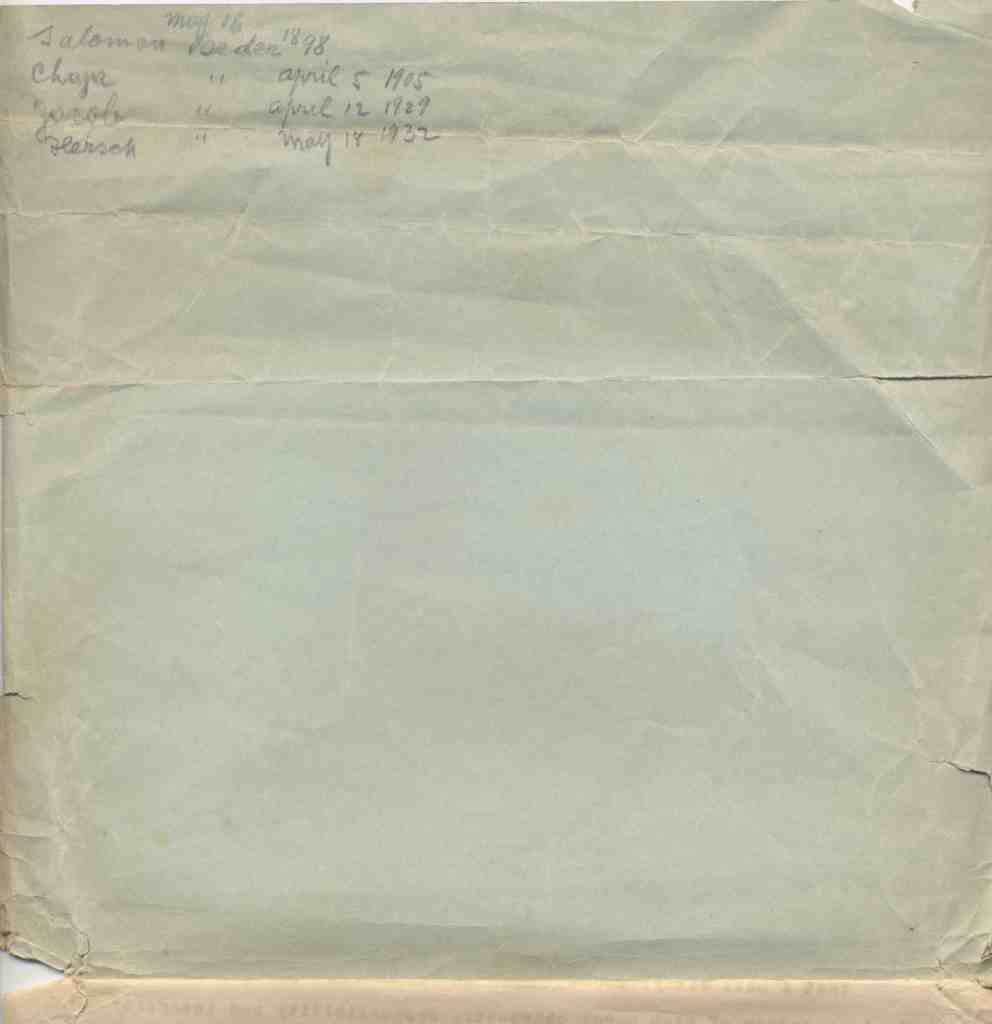
I learned more about the sponsor and my great-grandfather, Abraham Rothen, than I did about Max Faust during my research into the visa file. The letters show that Abraham was well respected in the community. He had a strong moral character, timely fulfillment of his obligations, and honorable business dealings. The lengths he went to secure all these letters and provide documentation displays his persistence, determination, and devotion to his daughter’s family. He donated money and time to his synagogue, Temple Israel in Dunmore, PA. He was known to have a good voice and would substitute as a cantor at the temple from time to time. As a father, he was said to be distant, detached, and authoritarian. However, it seems that he may have showed his love for his family in different ways. The affidavit shows how proud he was of his son-in-law and he went above and beyond to strengthen the application in the eyes of the US Consulate as much as he could. On the back page of the portfolio, he wrote the birthdays of the family of his other daughter, Chaya, who were still in Poland and unfortunately, did not immigrate to America. The mention of these birthdays suggest that he might have also attempted to sponsor them as well. Holocaust survivor Rosette Halpern remembers seeing Chaya Rothen Beder in the Rohatyn Ghetto. She was crying and cursing that her family did not rise up to save her. It was too late. Chaya, her husband Samuel, and her two children, Jacob and Hersch, were killed in the Holocaust.
Other useful links:
http://www.jewishgen.org/InfoFiles/Manifests/other/visa/
http://history.state.gov/milestones/1921-1936/immigration-act

 Genealogy by Alex
Leave a reply to EG Cancel reply