
BIRTH
The birth record for Sara Faust located in the birth registry for the Jewish community of Rohatyn shows she was born on June 14, 1875 in house number 98 in Rohatyn to Moses Faust and Rosa Leuchtling. Since her parents were not yet civilly married, although presumably religiously married, her birth was marked as being ‘illegitimate’ (unehelich). Thus, the surname applied to Sara was her mother’s maiden name, Leuchtling, instead of her father’s surname, Faust. However, Moses was still given credit for his participation in the family unit as written above his name are the words in German for ‘alleged father’ (angeblich Vater).

MARRIAGE
A notation in the comment portion of the birth record for Sara’s first child mentions the date Sara and her husband, Mechel Kaufman, registered their marriage and the location of the registration within Jewish marriage records for Rohatyn. This notation was written to verify the child’s birth as legitimate. It states ‘according to the local marriage records from’ (wedle tutejszej metryki zaślubin z) September 17, 1900. Volume 1, page 78. item 28. (Source: AGAD 300/2461, Page 187, Akt 43). Unfortunately, Volume 1 containing full marriage records for Rohatyn from 1900 – 1912 are not known to exist.

FIRST CHILD – KALMAN
Kalman Kaufman was born on April 3, 1902 in Rohatyn to parents, Mechel and Sara Kaufman, with assistance by midwife, Lea Barban. This birth record maintains the illegitimacy of Sara’s birth by referring to her as Sara Leuchtling, the daughter of Rosa Leuchtling without a mention her father Moses. Kalman’s birth record was deemed legitimate (ślubny) as Mechel and Sara were civilly married in 1900 shown above. Mechel, a ‘worker’ (zarobnik) in Rohatyn, was 28 years old and Sara was 27 years old at the time of Kalman’s birth. The Brit Milah ceremony where Kalman was given his name occurred on April 10, 1902 in Rohatyn with Simcha Todtfeld as the Mohel and grandfather, Moses Faust of Rohatyn, as the godfather (kum). It seems very probable that Kalman was named after musician Kalman Schwarz who died just nine days prior on March 25, 1902. The Faust family were not only close with the Schwarz family but were also related by marriage. A date written in the comment column of the birth record begins with a ‘+’ sign followed by the date, May 24, 1906, which signifies this addendum as Kalman’s date of death. This note also informs us that the death record was located in Volume 4, page 111, item 43 of the Jewish death registry for Rohatyn.

The death record for Kalman confirms that he died on May 24, 1906 in Rohatyn at the age of 4. The record references his date of birth. Dr. Anton Terlecki performed the post-mortem inspection of Kalman’s body on the same day and assigned registration number (Liczba) 73 to this death record. He diagnosed pleurisy (zapalenie opłucnej) as the cause of death. Pleurisy or pleuritis is an inflammation of the pleura, the lining of the lungs and chest cavity, which produces sharp chest pain, shortness of breath, and fever. Death from pleurisy is likely related to underlying pneumonia or empyema. Kalman was buried the following day in the Jewish cemetery in Rohatyn. Mechel and Sara were living in house number 87 in Rohatyn at the time of his death.

SECOND CHILD – GITTEL
Gittel was born on June 24, 1903 in house number 21 in Gologóry and delivered by midwife, Chaje Siebert. The naming ceremony took place at the same house on June 27th where the blessing was given by Berisch Amarant and Meilach Amarant.

THIRD CHILD – MALE STILLBORN
Midwife Lea Barban assisted Sara on delivering a male stillbirth (niezywo urodzony płod) on September 25, 1908 in Rohatyn. Dr. Anton Terlecki examined the body the following day and certified the cause of death as premature birth (przedwczesne urodzenie). The stillborn was buried in the Jewish cemetery in Rohatyn the same day as the examination.


FOURTH CHILD – CHAJE
Chaje Kaufman was born on August 12, 1909 in Rohatyn and the naming ceremony took place at the synagogue on August 16th. Juda Hersch Fried gave the blessing over Chaje.

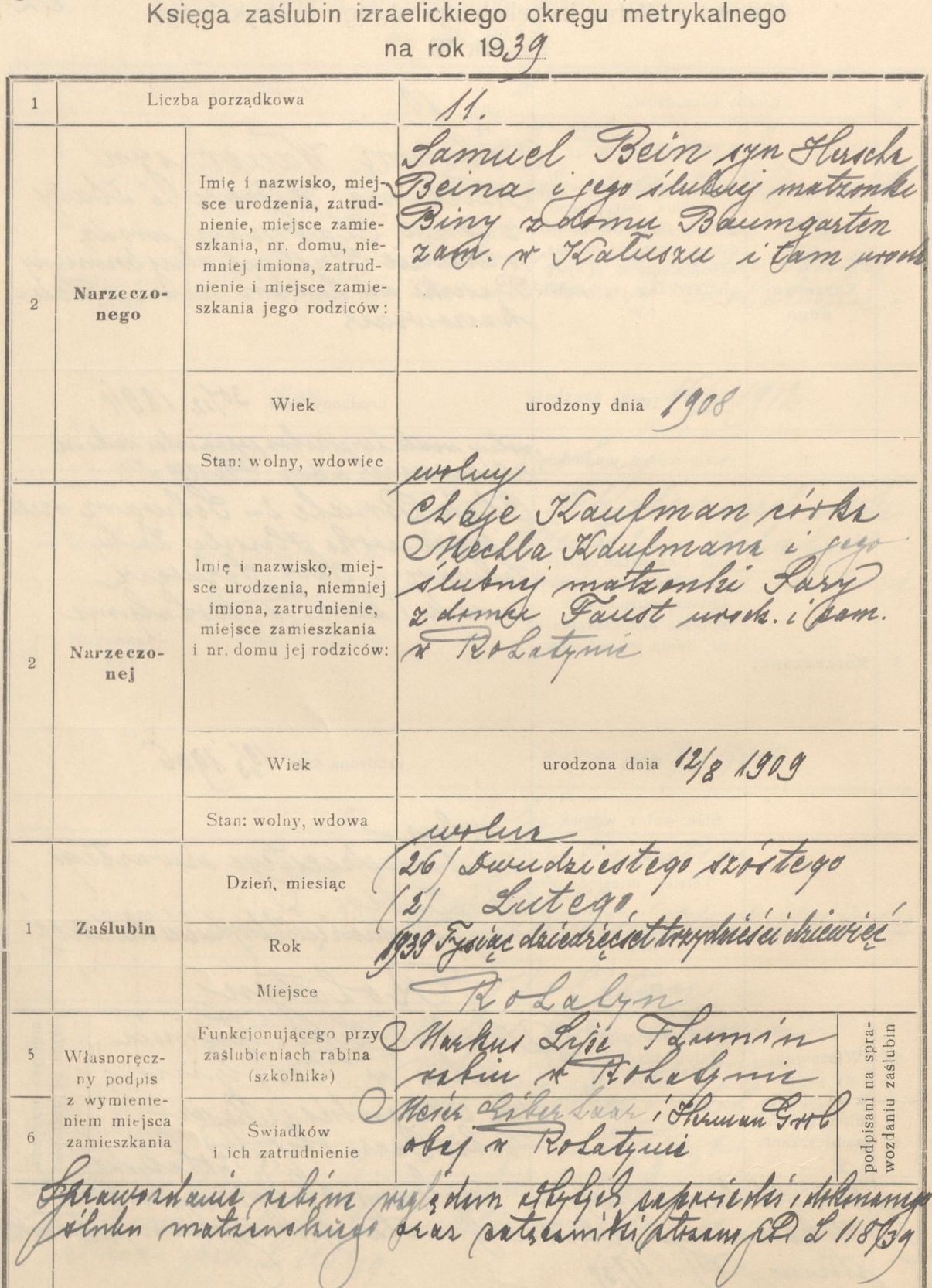
Chaje married Samuel Bein (1908-?), son of Hersch Bein and Bine Baumgarten of Kałusz, on February 26, 1939 in Rohatyn. The marriage was officiated by Rabbi Markus Lipe Thumin and witnessed by Meier Eiberhaar and Herman Grib(?). A note at the bottom of the marriage certificate refers to a rabbinical report regarding the oral banns and the performed marriage ceremony, as well as the status attachment under No. 118/39 (Sprawozdanie rabin względem ustnych zapowiedzi i dokonanego ślubu małżeńskiego oraz załącznika stanu pod L 118/39).
Samuel Bein was the younger brother of Freida Bein (1906-?) who had married Salomon Ber Brumengraber (1899-?) of Borysław in 1928 (Source: AGAD 300/3300, Page 18, Akt 70). During World War One, the one story brick home of Samuel’s father, Hersch (AKA Herman) Bein, was completely destroyed. The home was located on Dolińska street in Kałusz as house number 358 and included a basement and a metal roof. (Source: GG 686:254/TsDIAL 146/48/5).
FIFTH CHILD – ANZELM
Anzelm (AKA Anzel) Kaufman was born October 11, 1910 in Rohatyn with the assistance of midwife Lea Barban. The Brit Milah ceremony took place in the apartment (w mieszkaniu) on October 18th with Eisig Brandwein as the godfather and Juda Hersch Todtfeld as the Mohel.

Anzelm would have entered primary (elementary) school at resumption of classes after World War One at the usual age of six years old in 1917. After completion of four years of primary school in 1921, Anzelm would have been able to take an exam to enroll into the newly nationalized secondary school (gymnazium) in Rohatyn named after Rev. Piotr Skarga. However, I don’t find his name in the 1924/1925 report of the Piotr Skarga Gymnazium. I assume he completed primary school til the seventh grade and then matriculated into gymnazium in the fall of 1925. During the 1925 -1926 academic year, Anzelm was a student in the 4th Class. Toward the end of that school year when Anzelm was already 15 years old, he and his classmates signed the Polish Declarations of Admiration and Friendship for the United States. This multi volume tome complete with dedications and signatures from students and faculty throughout Poland was presented to President Calvin Coolidge to commemorate the 150th anniversary of American independence and to acknowledge the aid given to Poland during World War One.

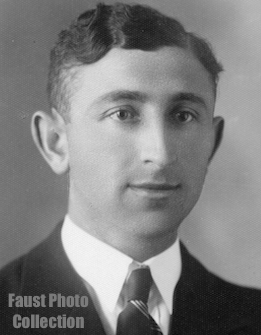
After graduation from the Piotr Skarga gymnazium and completion of his matura examination in 1930, Anzelm pursued a career in the legal field. He matriculated into a university to complete a five year master’s degree in law (magister prawa). The photograph of Anzelm Kaufman to the left is likely a copy used on his initial application or on his certificate upon completion in 1935. Successful graduation from the master’s program earned him the Mgr. (Magister) honorific in front of his name. To become an lawyer (adwokat) and represent clients in court and in litigation, Anzelm would need to complete a 3 year apprenticeship at a law firm.`
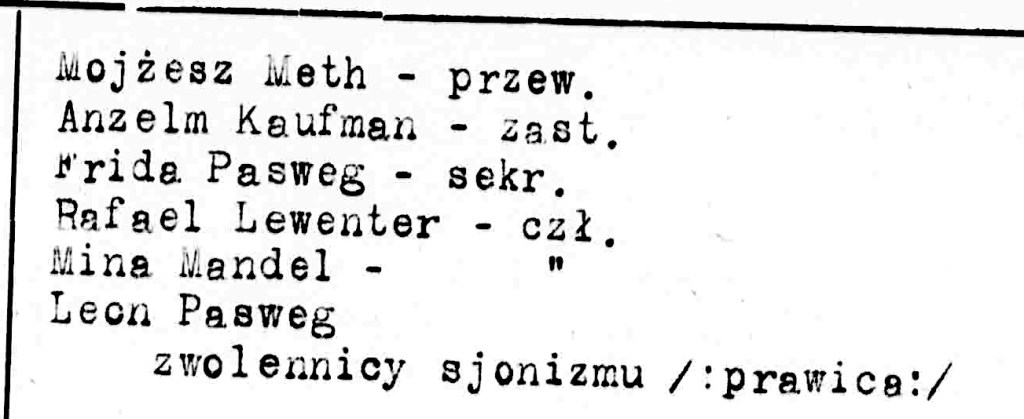
Anzelm was elected as vice president of a local Zionist youth group known as HaNoar Ha’Ivri. The year he served is not noted but he no longer held that position in 1937. This movement prepared youth for emigration to Palestine while maintaining traditional Jewish values and practices of Judaism. Members were supporters of right wing Zionism.
On July 4, 1937, Anzelm was elected to the board of Makkabi, a Jewish sports club in Rohatyn, as a member of the audit committee
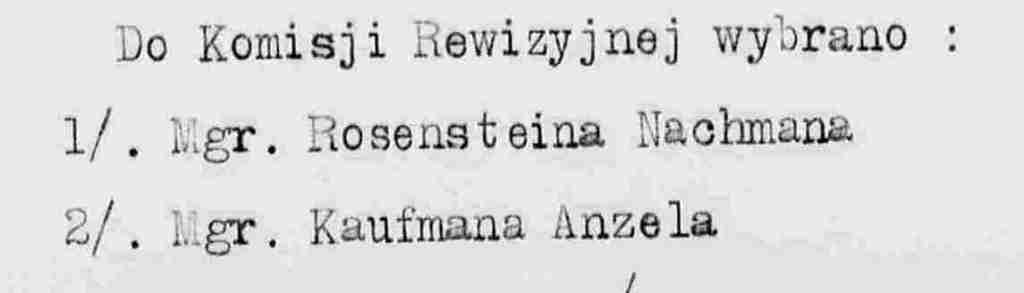
On August 28th, the club held an emergency re-election. Anzelm was again elected to the audit committee, but this time, he was joined by cousin Kalman Faust who was elected as Treasurer replacing Mendel Hutter.
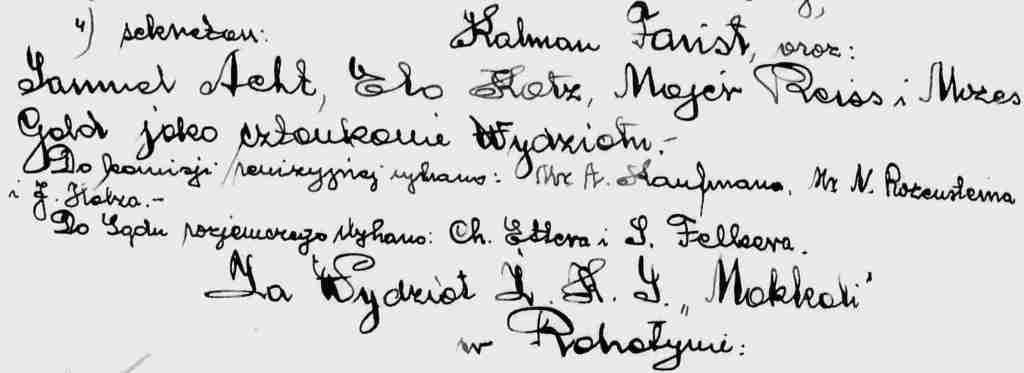
However, on November 9th, the county administration of Rohatyn reported to the Social-Political Department at the provincial office in Stanisławów on their suspension of activities of the club siting numerous violations of laws and statutes. These included a decision by the board to base the club on Jewish national principles, the presence of non-members on association premises, discrepancies in the number of registered members of the club, and discovery of members playing cards at meetings.
On November 15th, the members of Makkabi in Rohatyn decided to dissolve the club. Each member including Anzelm signed the notice which was then resubmitted as a typewritten list.

On November 19, 1937, the Rohatyn county administration formally resubmitted the composition of the board of Makkabi to the provinicial office in Stanisławów. This notification listed the board members as those elected in the July 4th election and the party affiliated with members of the organization as Zion Revisionists. Anzelm Kaufman, along with Attorney Ludwik Katz, were responsible for the vitality of the organization, and had rated their social and moral value as average.

Another notification of the composition of the board of Makkabi was sent to the provincial office in Stanisławów on November 27, 1937. This notification listed the board members who were elected on August 28, 1937. However, Anzelm was not mentioned in this notice and shows he failed to be elected to the audit committee which was comprised of Juda Scharer and Mozes Gold. On December 7th, a letter was sent from the county administration to the provincial office notifying them of the decision by members of Makkabi to liquidate the organization and vacate the premises of Leib Kirschenbaum.
SIXTH CHILD – GOLDE CIRL
Golde Cirl Kaufman was born on May 16, 1912 in Rohatyn with the assistance of midwife Lea Barban. Seven days later, she was named after Sara’s paternal grandmother, Golda Cyrl Faust née Zucker, who had died in 1910. The blessing was given by Juda Hersch Fried. Sadly, Golde barely lived two months. She died on July 5, 1912 and was buried two days later in Rohatyn. Dr. Anton Terlecki provided the cause of death as intestinal infection. Mechel and Sara Kaufman were living in house number 338 at the time of her death.


SEVENTH CHILD – SOSIE
According to the death record, Sosie Kaufman was one year old when she died on August 9, 1913 in Rohatyn. In the comments section, it is noted that a record of her birth was not entered (nie wpisana) in the Jewish birth register of Rohatyn. If we take the one year at face value, this would mean that Sosie was born in August of 1912 which is 3 months after the documented birth of Golde Cirl. Since this does not account for 9 months of pregnancy after Golde’s birth, it is more likely that Sosie was born after March of 1913. The cause of death diagnosed by Dr. Terlecki was measles (odra). She was buried on August 11th in Rohatyn.

A LETTER FROM ESTHER TO DAVID ABOUT SARA
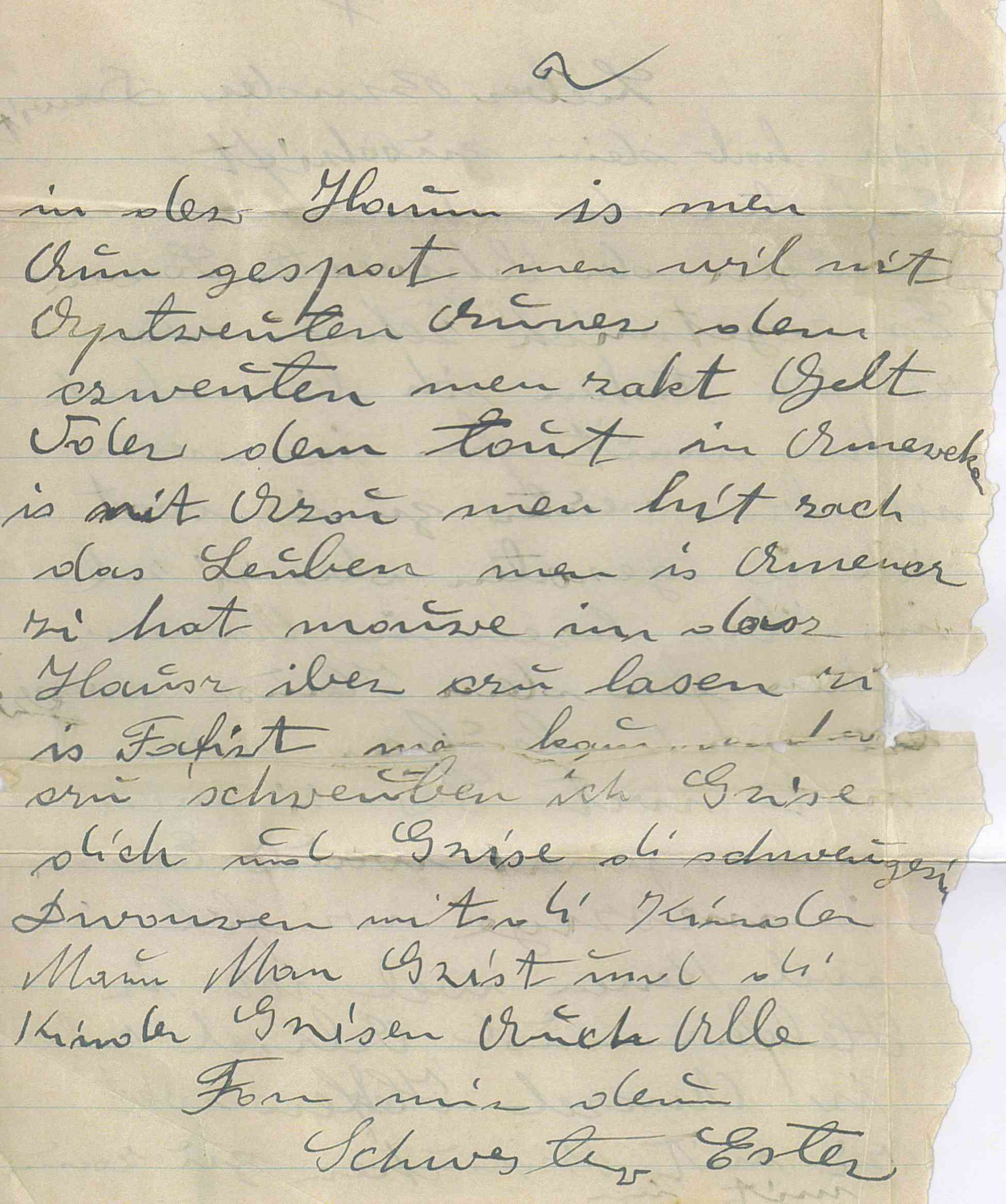
In 1939, Sara’s sister, Esther, who was living in the United States, wrote a letter to her brother, David, in Rohatyn. The letter was written in response to a letter she had received from David who had relayed some distressing news about Sara’s husband, Mechel. Esther fears that Mechel will kill Sara as he is ‘crazy’ which implies that Sara is being physically abused by her husband. However, being far way in the United States, there is little Esther can offer except to encourage Sara and Anzelm to move out the house and make their own life without him.
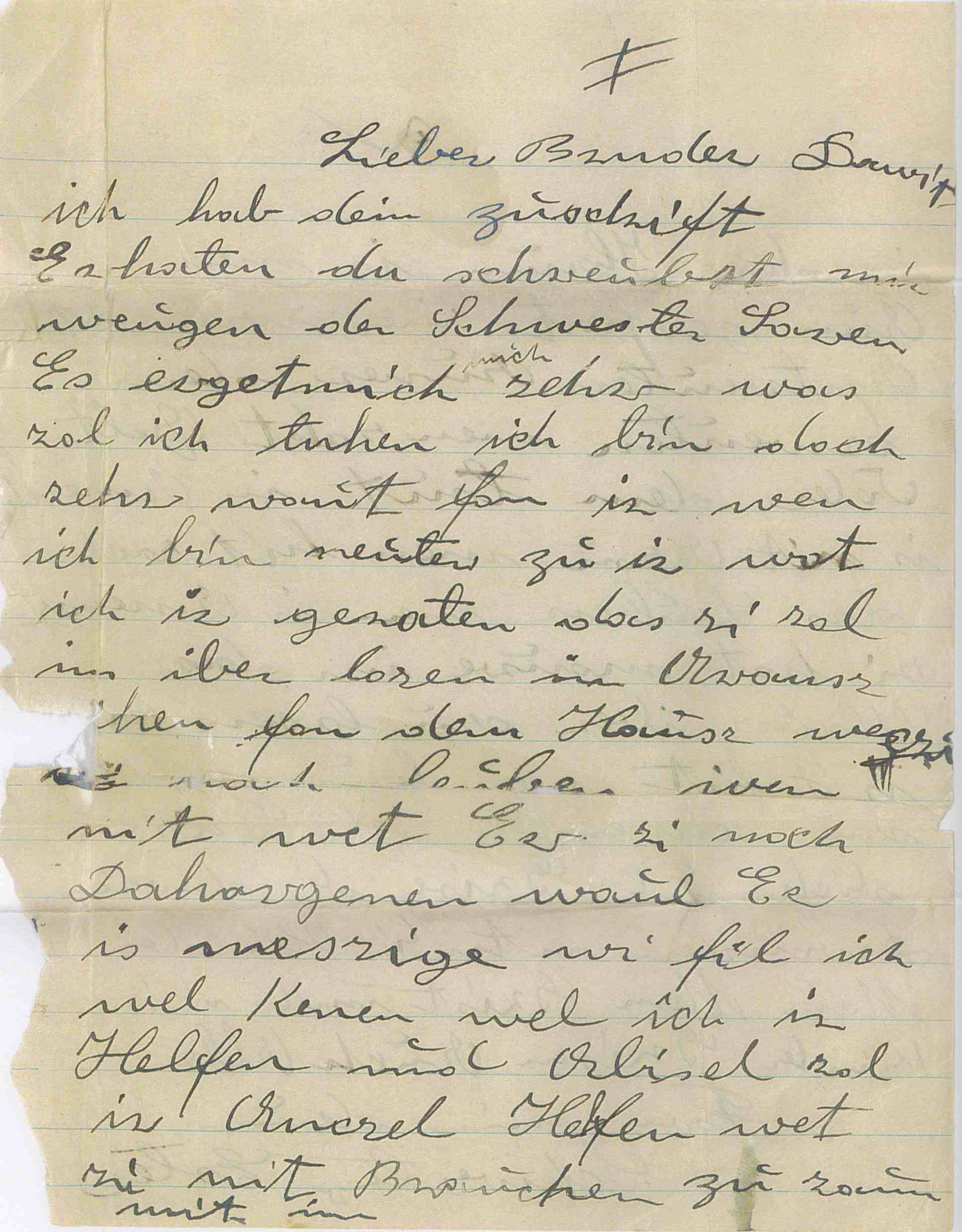
Page 1: Lieber Bruder Dawid, ich hab dein zuschrift erhalten du schreubst mir weugen der Schwester Soren Es ergetmich nich zehr was zol ich tuhen ich bin doch zehr waut fon ir wen ich bin neuter zu ir wat ich ir geraten das zi zol im iber lozen in Arausz gehen fon den hausz weczi noch leuben wen nit wet er zi noch dahargenen waul er is mesrige wi fil ich wel kenen wel ich ir Helfen und Abisel zol ir Anczel Helfen wet zi nit Brauchen zu zaun mit im
Page 2: In der harun is men Aun gespart men wil nit optreuten Auner dem czweuten men zakt gelt oder dem tout in Amereke is nit azou men bit zach das Leuben men is Amerz zi hat maure im daz hausz iber czu lasen zi is fafirt mer ….. czu schreuben ich grise dich und grise di schneugerin Dwonren mit di kinder maun man grist und di kinder gisen auch alle,
Fon mir dein,
Schwester Ester
Page 1: Dear Brother David, I have received your letter you wrote to me regarding sister Sarah. It still distresses me very much. What should I do? I am indeed very far from her. If I were closer to her, I would advise her that she should leave him [her husband, Mechel] behind and go out from the house; [then] she will still live. If not, he will kill her because he is crazy. As much as I am able, I will help her, and Anzcel should help her a little bit. [Then] she will not need to be with him.
Page 2: In the stubbornness one is locked in; one does not want to yield one from the other. One says [it is] ‘money or death.’ In America it is not so; one builds for oneself the life—one is truly [better off]. She [Sara] has fear to leave the house over to him. She is misled. [It is too] much to write. I greet you and greet sister-in-law Devorah with the children. My husband greets and the children kiss also all. From me, your sister Ester.”
A LETTER FROM ESTHER TO SARA
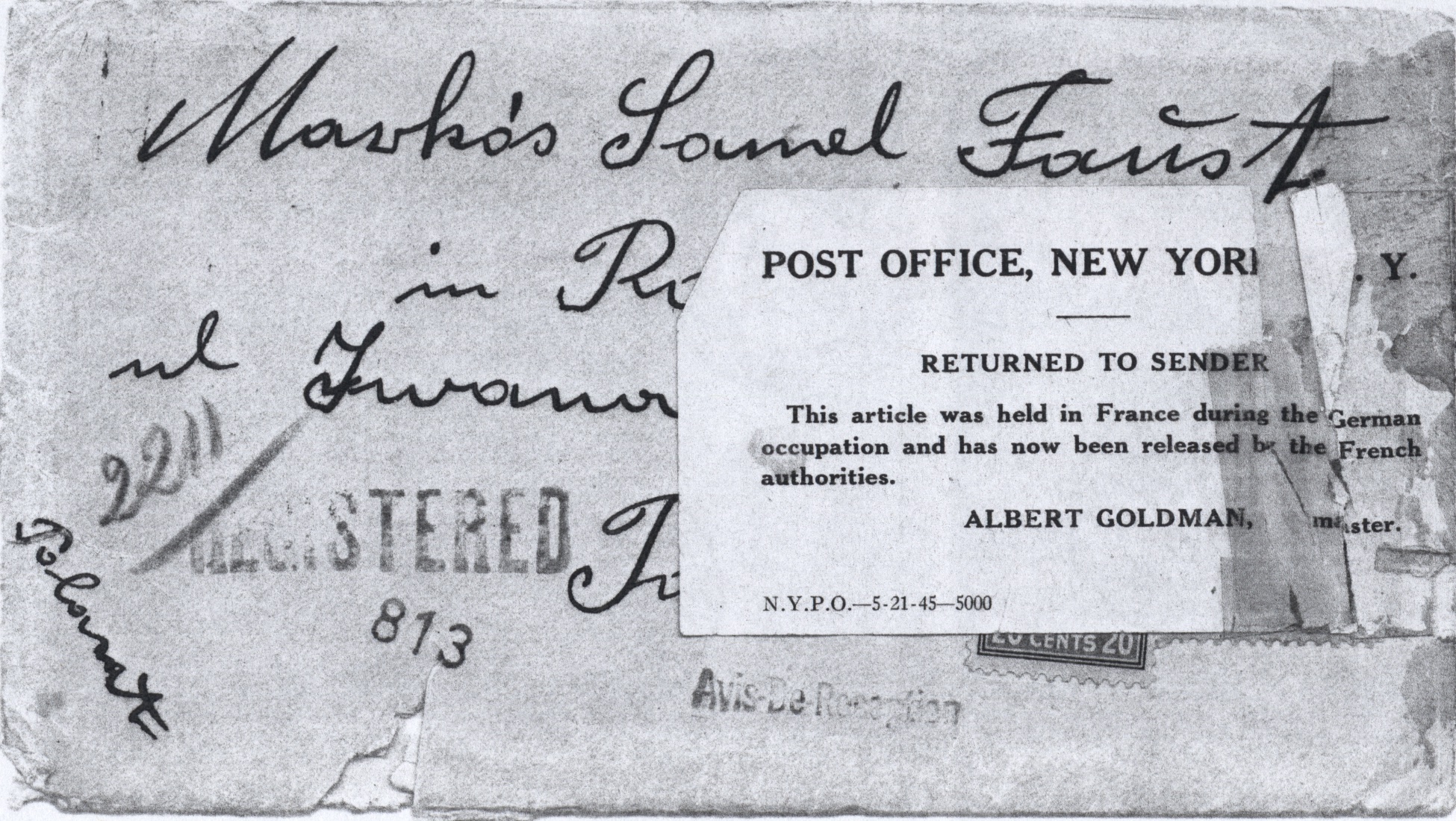
Esther wrote a letter directly to Sara on August 27, 1939 not knowing that in just four days from then, Germany would invade Poland and World War Two would begin. Esther wrote of her disappointment at not receiving a response after sending money to Sara and clothes to Gittel’s children, her joy over Anzelm’s photo and Chaya’s recent marriage to Samuel Bein, her disapproval with Anzelm’s girlfriend and Sara’s husband, Mechel, and her encouragement to Sara to leave Mechel and live separately with Anzelm after having received news of their marital strife in the letter from David. Esther also revealed her frustration with Sara as Esther felt she did everything for herself her whole life without Sara’s help and that in no way does this even the score. However, Esther was still hopeful that Sara and Anzelm would soon be able to leave Poland and join her in the United States. It ends with Esther confirming that she forwarded Sara’s papers to Jacob and was including photos of the family taken by her son, Moses, in this letter. Despite tense words, its a letter written with love, disagreement, and concern for her older sister and her children with perhaps a Faust trait of giving honest opinion and direction even when unsolicited. The front of the envelope was addressed to Sara’s brother Markós Samel Faust at ulica Ivana Franka 10, Rohatyn, Poland while on the back of the envelope, a return address was written. It was stampd at the post office in Ozone Park, New York the day after the letter was written on August 28th and then again stamped as foreign post from New York the same day. The letter made its way to Europe but it was never received. The letter returns to New York over five years later on May 17, 1945 where a note was attached to the envelope reading “Post Office, New York. Returned to Sender. This article was held in France during the German occupation and has now been released by the French authorities. Albert Goldman, master.” The envelope is then stamped again at Ozone Park on May 29, 1945.
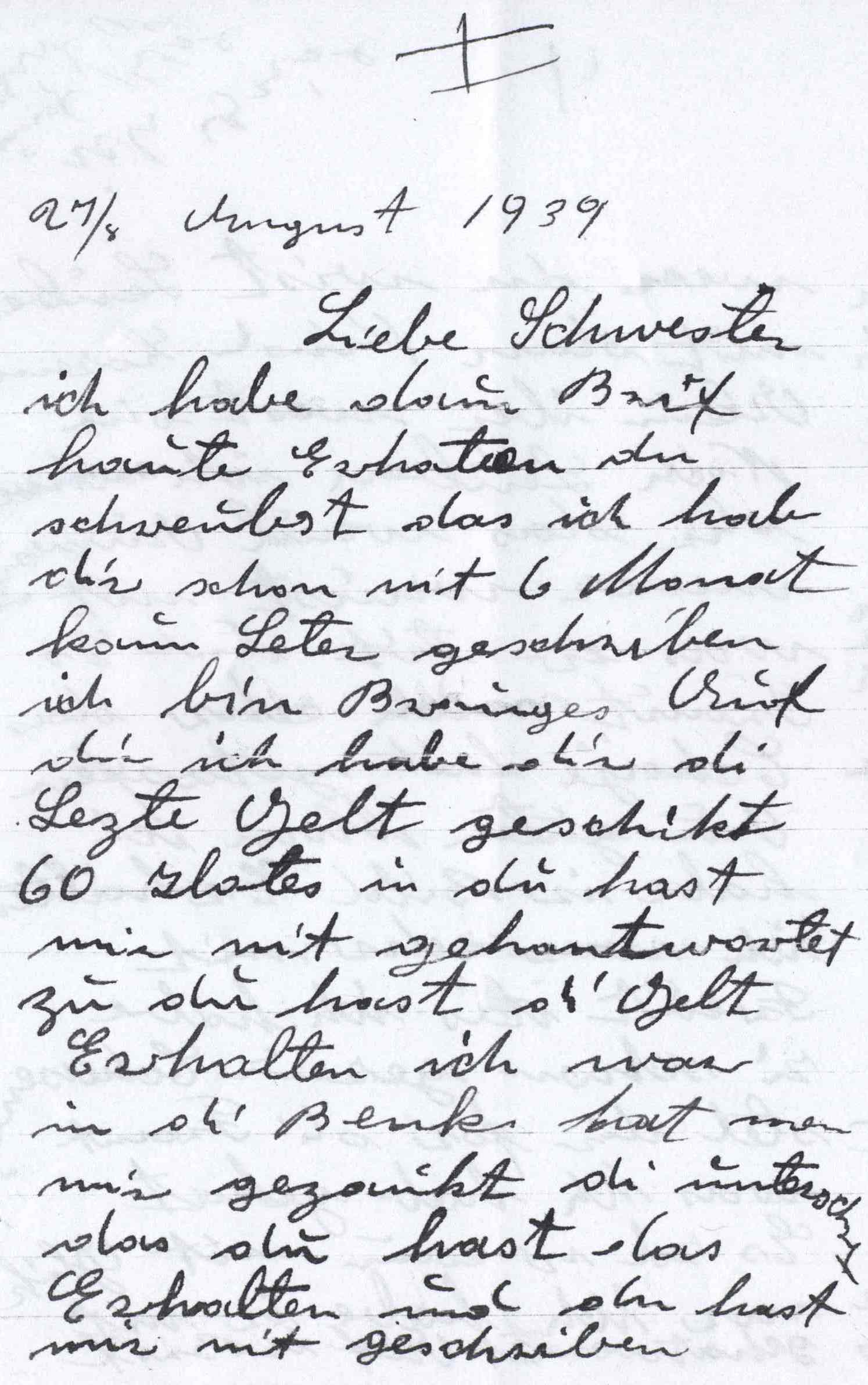
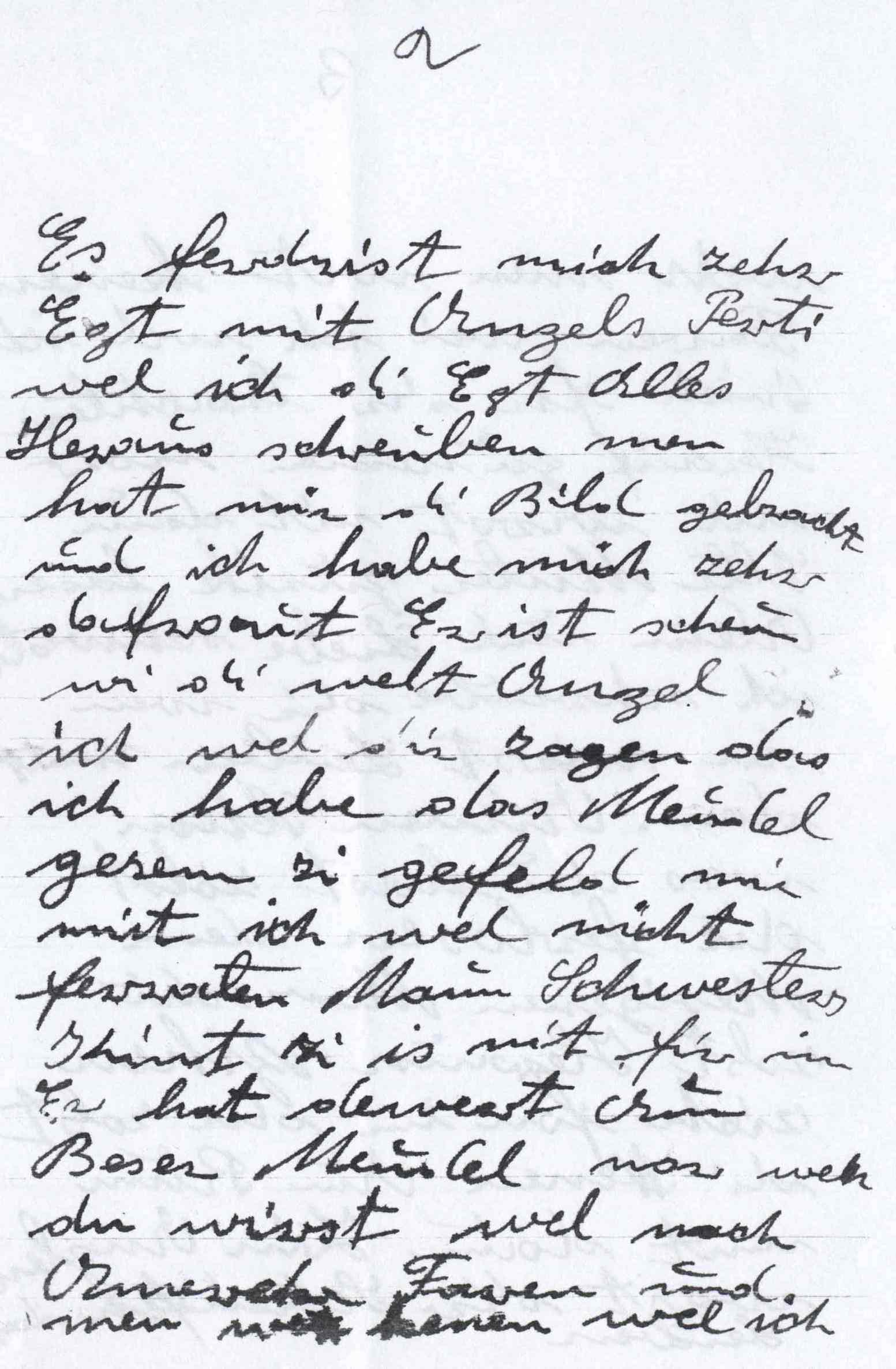
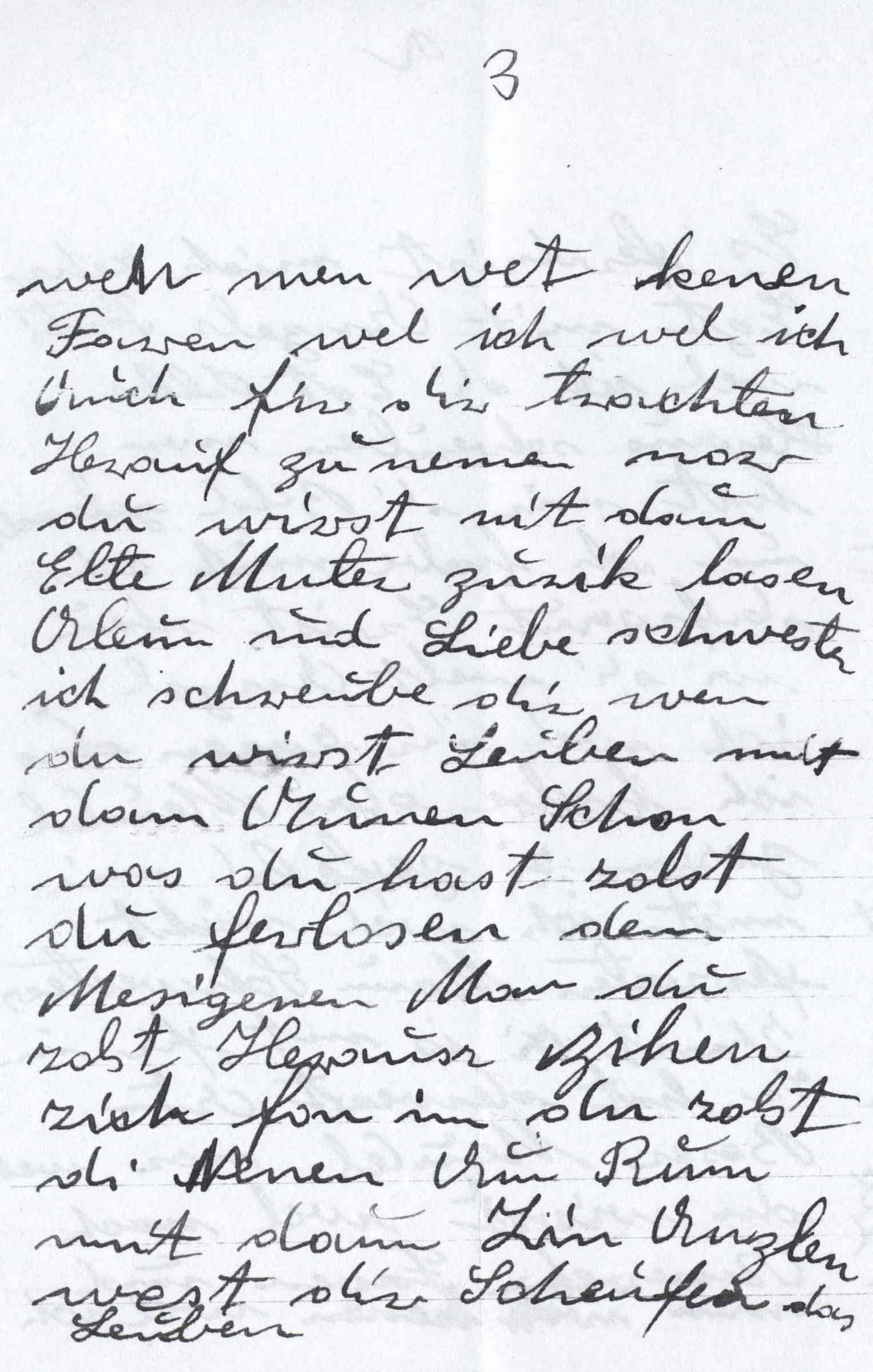
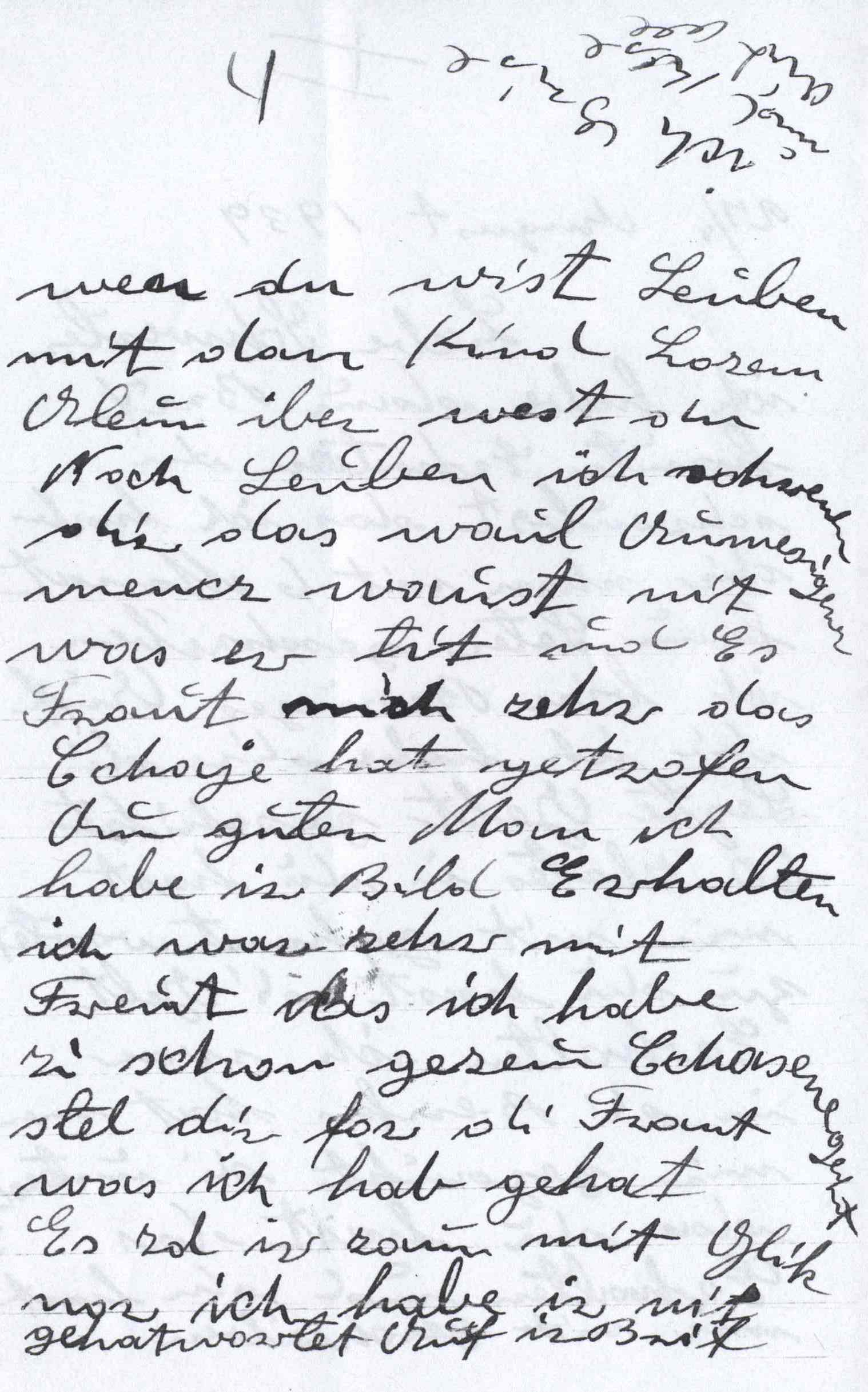
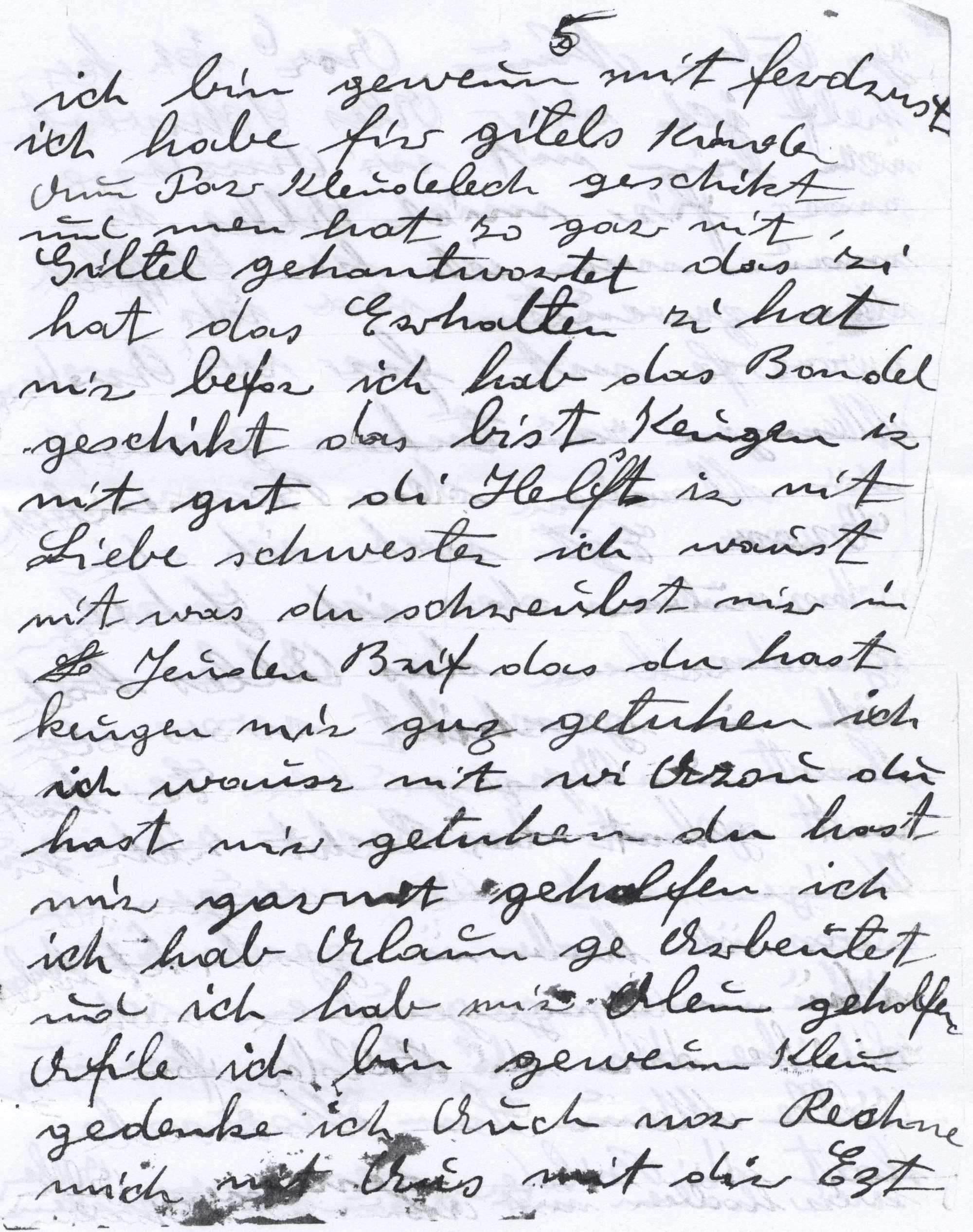
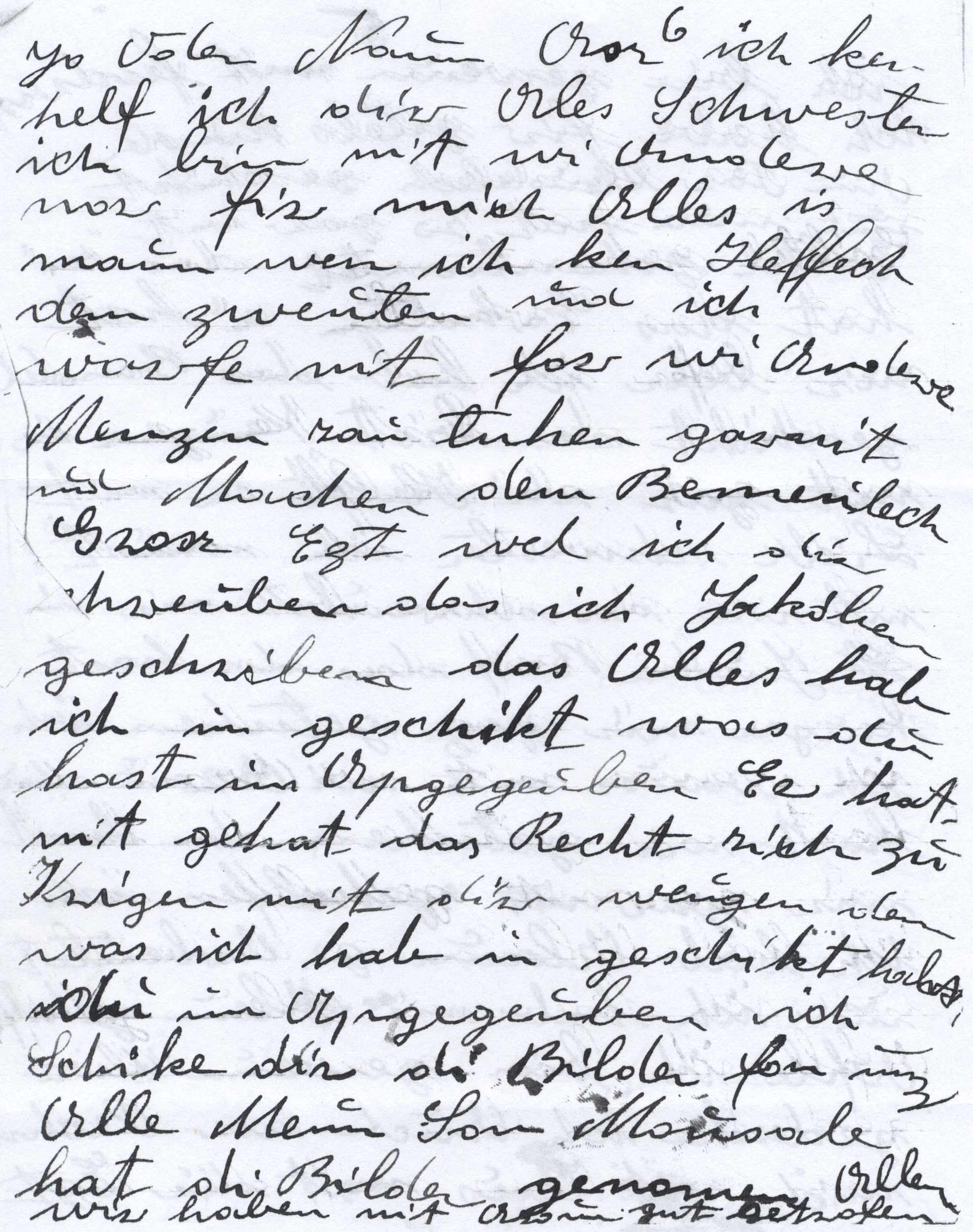
Below is a transcription of Esther’s letter written in Transliterated Yiddish (AKA Romanized Yiddish) and translated to English using Google’s Gemini 3 Thinking mode.
Page 1: 27/8 August 1939. Liebe Schwester, ich habe daun Brif haute Erhaten. Du schreubst das ich habe dir schon nit 6 Monat kaum Leter geschriben. Ich bin Brauyes Auf dir ich habe dir di Lezte Gelt geschikt, 60 zlotes un du hast mir nit gehantvortet zu du hast di Gelt Erhalten ich vor un di Benk hat men mir gezaukt di unterschrif das du hast das Erhalten und du hast mir nit geschriben.
Page 2: Es ferdrist mich zehr Ezt mit Anzels Perti vel ich dir Ezt Alles Heraus schreuben men hat mir di Bild gebracht und ich habe mich zehr dasfraut Er ist scheun vi di velt Anzel ich vel dir zagen das ich habe das Meudel gezen zi gefeld mir nit ich wel nicht ferraten Maun Schwester Kint zi is nit fir im Er hat dervert zur Beser Meudel var vehr du virst vel nach Amereka Faren und men nach kenen vel ich
Page 3: vehr men vet kenen faren vel ich wel ich auch fir dir trachten herauf zu nemen nor du virst nit daun Elte Muter zurik lasen Aleun und Liebe schwester ich schreube dir ven du virst leuben mit daun Aunen Schon vos du hast zolst du ferbosen den Mesigenen Man du zolst Herausr zihen zich fon im du zolst di nenen Au Rum mit dain Zin Anzlem vest dir scheufed das leuben
Page 4: ven du vist leuben mit dan Kind lozen aleur iber vest du noch leuben ich schreuben dir das waul ein Aumesigener Mencz waust nit was er tut und Es fraut mich zehr das Chaje hat getrofen aun guten Man ich habe ir Bild erhalten ich var zehr mit freut das ich habe zi schon geseun Chasene gehit stel dir for di Fraut vas ich hab gehat Es zol ir zaun mit Glik nor ich habe ir nit gehatvortet auf ir Brif. (in the top right corner: ich grise und kise aut ale.)
Page 5: ich bin geweun mit ferdrust ich habe für Gitels Kinde aun par Kleudelech geschikt und men hat zo gar nit Gittel gehantvortet das zi hat das erhalten zi hat mir befor ich hab das Bandel geschikt das bist keugen ir nit gut di Helft ir nit Liebe schwester ich vaust nit vas du schreubst mir in Jeuden Brif das du hast keugen mir gnz getnhen ich ich vausr nit vi azou du hast mir getnhen du hast mir garnet geholfen ich ich hab alaun ge arbeutet und ich hab mir aleun geholfen Afile ich bin gewein kleun gedenke ich auch nor reahne mich nit aus mit dir ezt
Page 6: yo oder Naun aor ich kerhelf ich dir ales Schwester ich bin nit vi Andere nor fir mich alles is maun wen ich ken helfech dem Zweuten und ich warfe mit for wi Andere Menzen zau tnhen garnit und machen dem Bemeulech Grosr Ezt wel ich dir schreuben das ich Jakoben geschriben das Alles hab ich in geschikt vas du hast im Apgegeuben Er hat nit gehat das Recht rich zu krigen mit dir weugen dem was ich habe im geschikt habt du im apgegeuben ich schike dir di Bilder fon unz alle Meun Son Mousale hat di Bilder genomen Alle wir haben mit Azou gut getrofen
Page 1: August 27th, 1939. Dear sister, I received your letter today. You write that I haven’t written a letter to you in 6 months. I am angry (broiges) with you. I sent you the last [sum of] money—60 zlotys—and you didn’t answer me whether you received the money. I was at the bank, and they showed me the signature [proving] that you received it, and yet you didn’t write to me.
Page 2: It upsets/vexes me very much. Now, regarding Anzel’s match/party, I will now write everything out to you. They brought me the picture and I was very happy. He is as handsome as the world. Anzel, I will tell you that I have seen the girl—she does not please me. I do not want to betray my sister’s child, but she is not for you. You deserve a better girl. Wait until you will want to travel to America, and as soon as its possible again
Page 3: And when one will be able to travel, I will—I will also strive for you to take you here, but you will not leave your old mother back there alone. And dear sister, I write to you. If you will live with your own [means] already what you have, you should leave the crazy man. You should pull yourself out from him; you should take along your son, Anselm, and create the life for yourself.
Page 4: If you will live with your child and leave [the husband] all alone, you will still survive. I write to you this because a crazy man knows not what he does. And it joys me very much that Chaya has met a good man. I have received her picture; I was very [filled] with joy that I have already seen her [having] had a wedding. Imagine the joy that I have had! It should be with luck for her, but I have not [yet] answered her letter. (In the top right corner: I greet and kiss you all.)
Page 5: I have been with frustration. I have for Gitel’s child sent a few little-clothes, and one has not even answered for Gitel that she has received it. She [Gitel] told me—before I even sent the bundle—that you are not good toward her and you do not help her. Dear sister, I know not what you write me in every letter, that you have done good toward me. I, I know not in what way you have done [for] me; you have helped me with nothing. I, I have worked alone and I have helped myself alone. Even [when] I was small, I remember [doing so] also; so do not try to settle accounts with me now.
Page 6: Yes or no—but I help you with everything, sister. I am not like others, for to me everything is [the same/mine] when I can help the other person. And I do not reproach [others] like other people [who] do nothing and make the little things [seem] larger. Now I will write to you that I wrote to Jakob: that I sent him everything that you handed over to him. He did not have the right to fight with you because of what I sent him [and] you gave over to him. I am sending you the pictures of all of us. My son Mousale took the pictures. All of us turned out so well in them.
The front of the envelope was addressed to Sara’s brother Markós Samel Faust at ulica Ivana Franka 10, Rohatyn, Poland while on the back of the envelope, a return address was written. It was stampd at the post office in Ozone Park, New York the day after the letter was written on August 28th and then again stamped as foreign post from New York the same day. The letter made its way to Europe but it was never received. The letter returns to New York over five years later on May 17, 1945 where a note was attached to the envelope reading “Post Office, New York. Returned to Sender. This article was held in France during the German occupation and has now been released by the French authorities. Albert Goldman, master.” The envelope is then stamped again at Ozone Park on May 29, 1945.
THE FATE OF THE KAUFMAN FAMILY
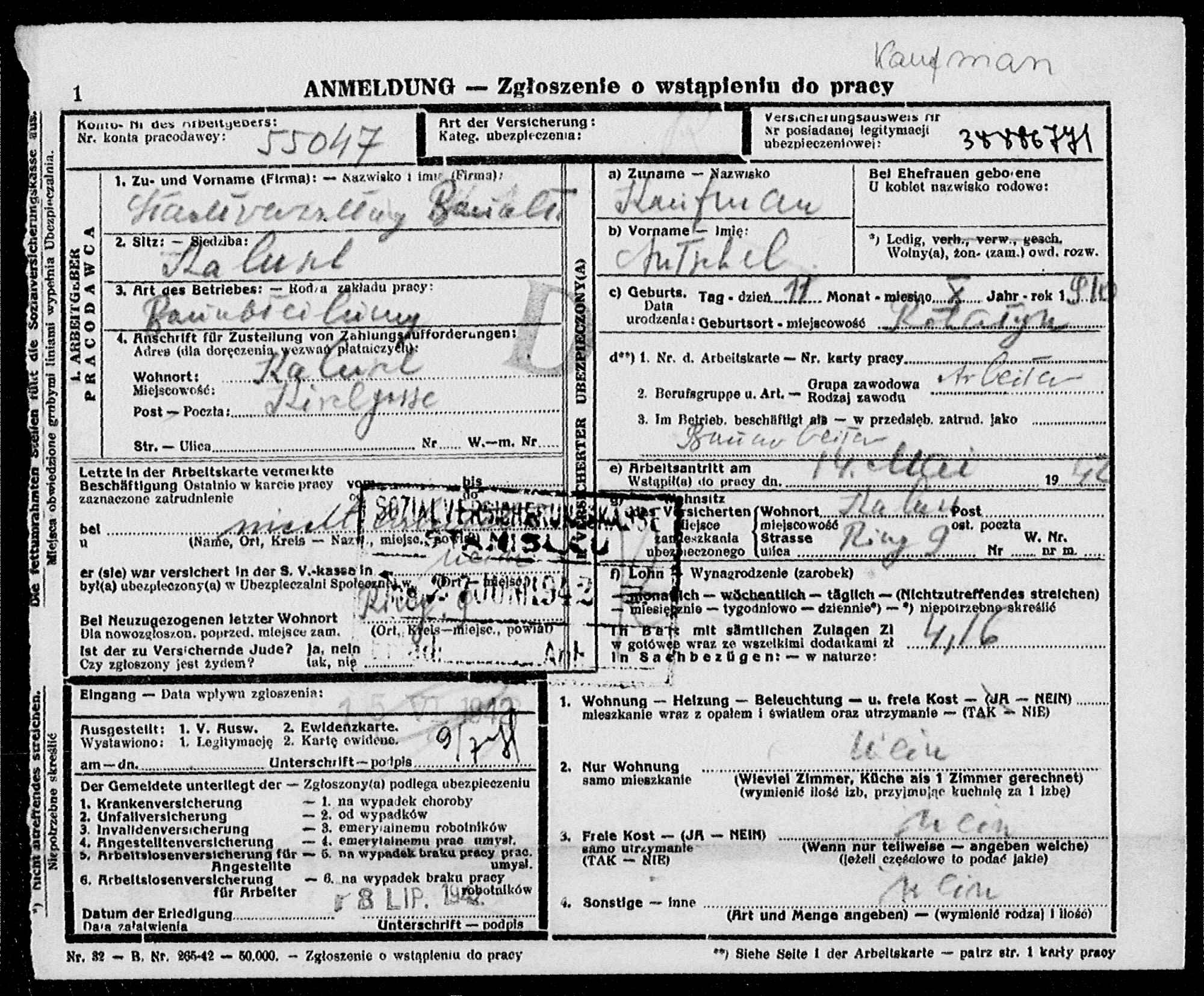
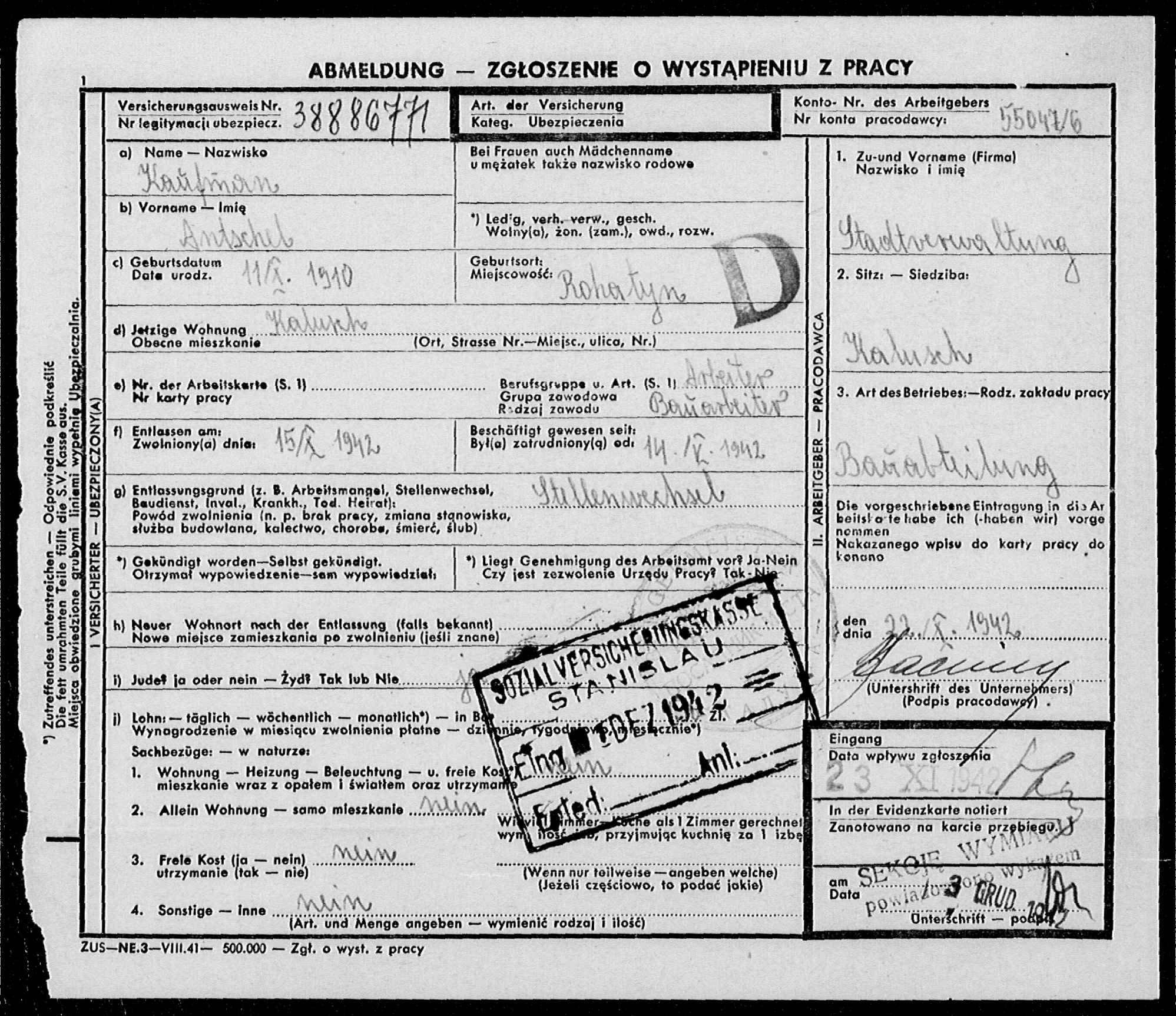
Social Insurance Registration forms were used by the Nazis to keep track of their forced human labor and to give the appearance to the workers of a viable insurance plan in case of sickness, disability or work injury. These forms are currently stored in the Central State Archive of Ukraine in Ivano-Frankivsk and were imaged by the United States Holocaust Memorial and Museum (Source: USHMM RG-31.130M/DAFO Fond R57). After beginning work as a construction worker for the city of Kalusz on May 14, 1942, Anzelm filled out this workers insurance form. He completed the required fields noting his name as Antschel Kaufman and his date and place of birth as October 11, 1910 in Rohatyn. At the time, he was one of 5,500 remaining Jews living in Kalusz where he resided at Ringplatz 9, single and terrified. In the month prior, 800 Jews in Kalusz who were deemed unfit for labor were arrested by the Security Police detachment from Stanisławow and shot. Anzelm brought the form to his employer, the city construction office of Kalusz, on Kirelgasse to sign and date on June 10th. He submitted the form to the local employment office in Kalusz on June 15th. It appears the form was sent to the main office in Stanisławow where it was received and stamped on June 27th. The application was reviewed on July 9th and Anzelm was assigned an employment ID number 38886771. The insurance application was approved on July 18, 1942. In reality, no insurance was provided. If a worker was unable to perform their duties, he/she was usually severely beaten or shot. Life in the Kalusz ghetto was bad enough. Lack of food led to starvation and death on a daily basis as people died from hunger on the streets. Food shortage only worsened as the population in the ghetto grew in August of 1942 as Jews from neighboring towns were resettled in Kalusz. That Fall, the Security Police from Stanisławow came to Kalusz to commit a series of Aktions where Jews were rounded up and sent to Stanislawow to be murdered or forced onto train cars headed for the extermination camp, Belzec. A second form the Social Insurance Office titled Notification of Termination of Employment noted the end date of Anzelm’s work as a construction worker for the city as October 15, 1942. The cause of termination given was “change in position”. This date likely corresponds to the final Aktion in Kalusz implemented by the Gestapo and Ukrainian police. This Aktion, which lasted 36 hours, raided homes and hidings spots ultimately capturing over 1200 Jews including members of the Jewish police and the Judenrat. They were brought to the railway station where they were forced onto freight trains and transported to Belzec. Those that survived that Aktion in the ghetto were soon taken to Stanisławow under false pretenses and were murdered. By the end of October 1942, the Germans officially declared Kalusz as Judenrein (free of Jews).
It seems likely that Anzelm was murdered in Belzec as a result of the final Aktion in Kalusz in mid-October. Even if he did survive, he most likely did not escape being murdered in Stanisławow in the final round up of Jews. Despite the documentation noting Anzelm’s residence in Kalusz, a couple testimonies place him in Rohatyn at the time of his death. The page of martyrs written in the Yizkor book for Rohatyn lists Anzelm along with members of his family. A page of testimony written by Holocaust survivor Sabina Wind-Fuchs noted Anczelm was living in the Rohatyn Ghetto during the German occupation and had perished there in 1942. Records of the Extraordinary Soviet Commission note Anzelm had perished in Rohatyn/Stanisławow.
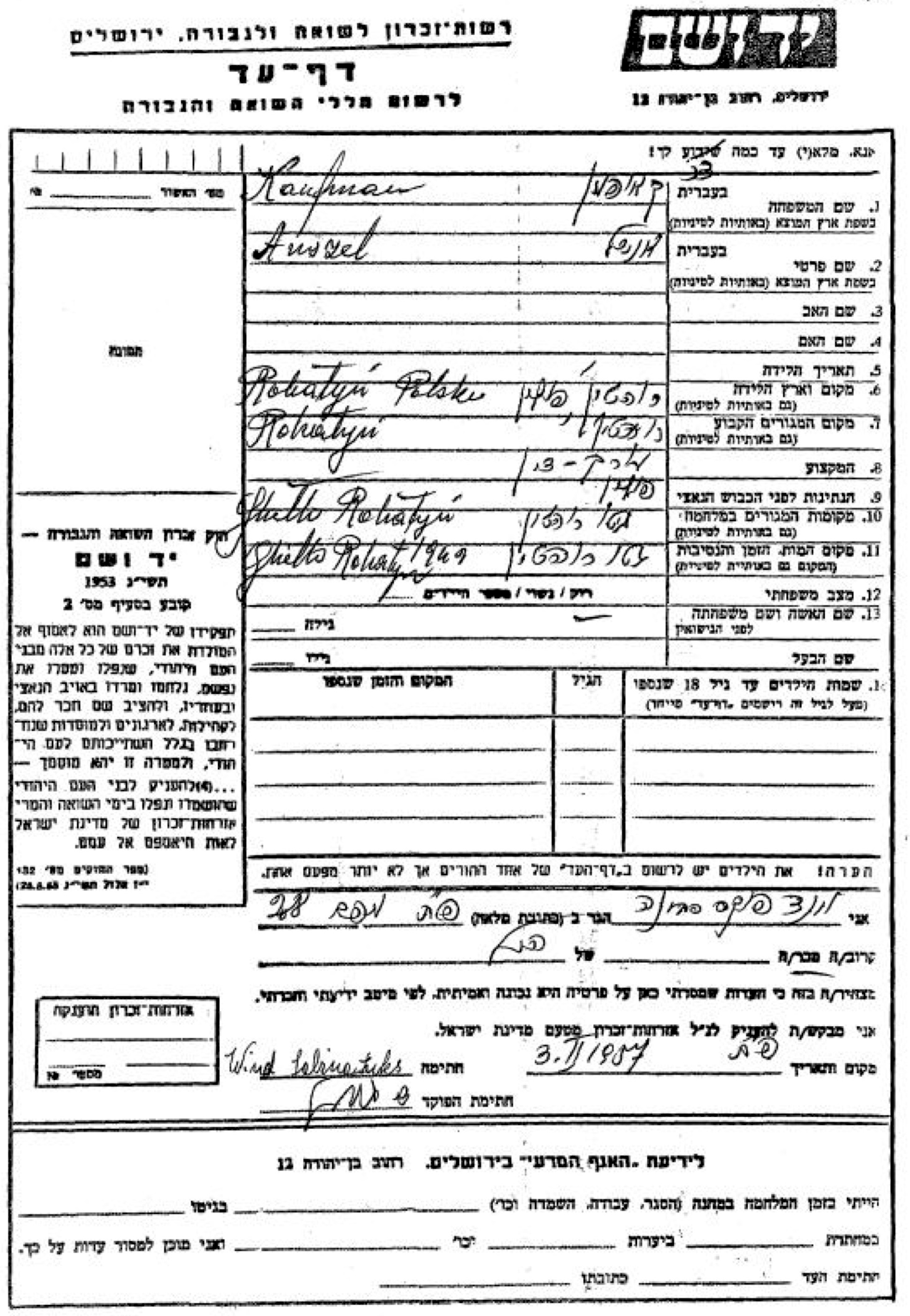
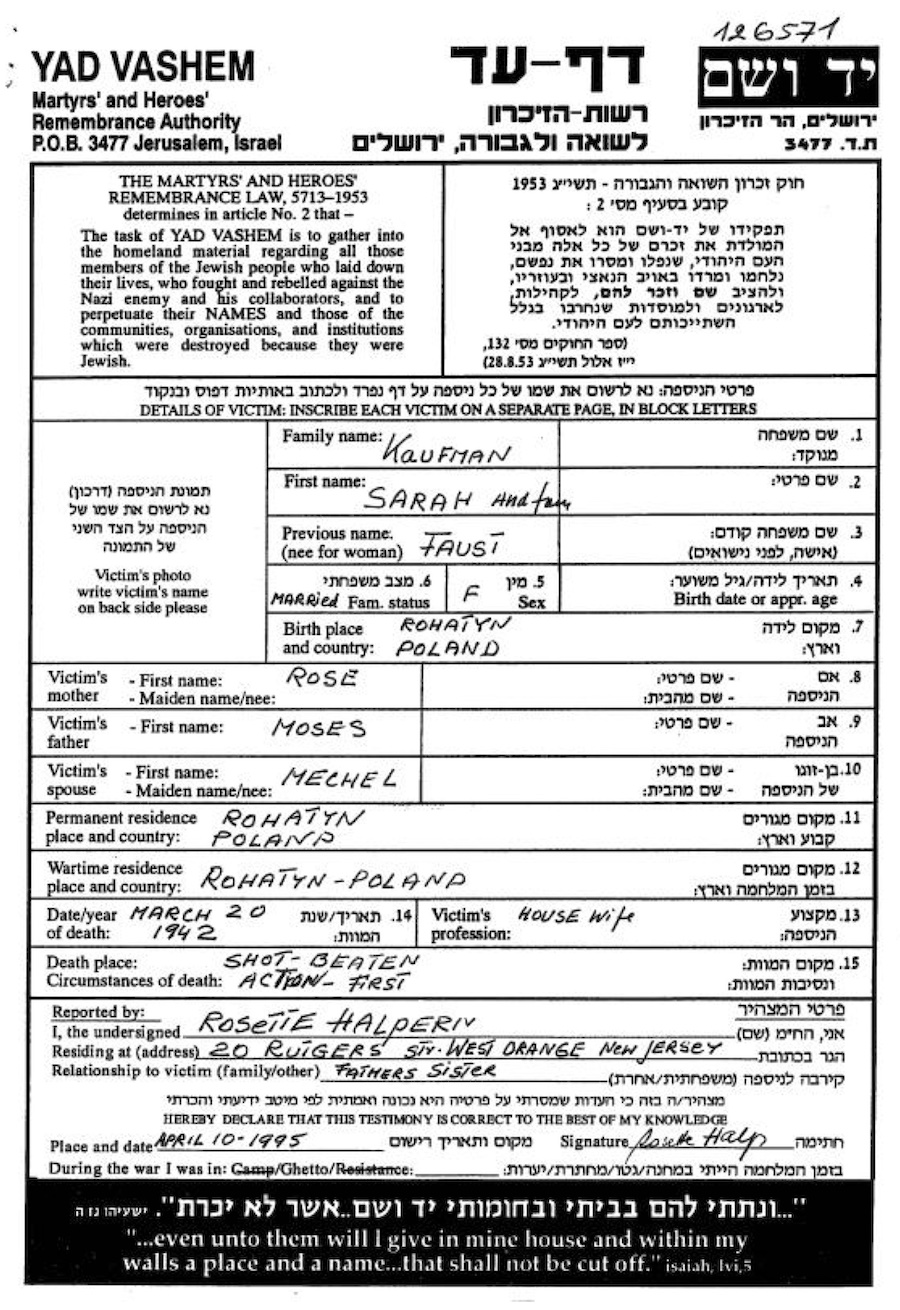
Mechel and Sara Kaufman are listed with Anzelm, and Gittel and her family among the martyrs killed in Rohatyn during the Holocaust. There is not a seperate listing for Chaje Bein and her family. Holocaust survivor, Rosette Halpern, completed a page of testimony for her Aunt Sara noting that Sara was beaten and shot during the first Aktion in Rohatyn, and buried in a mass grave on March 20, 1942. The Soviet Extraordinary Commission recorded the death of Mechel and a total of 12 members of his family during the Holocaust. This would include Mechel, Sara, Anzelm, Gittel, her husband, three children, Chaje, her husband Samuel Bein, and their two children.


Remaining Questions.
- Where was the Kaufman family during WW1?
- Where did Anzelm Kaufman receive his master’s degree?
- What happened to Chaje Bein and her family?
- What were names of Gittel’s husband and children?
- Do photographs of the Kaufman family still exist among Esther’s descendants?
 Genealogy by Alex


