
BIRTH
Izak Hersch Faust was born on Sunday, November 24, 1878 in house number 98 in Rohatyn to Moses Faust and Cypre Rosa Leuchtling with the assistance of midwife, Etel Wandmeyer. The parents were noted to be ‘supposedly married’ (rzekomo ślubne) thus the birth was given the benefit of the doubt on legitimacy and Isak Hersch was named with the Faust surname. Alter Lewinter attested to the marriage of Moses and Cypre Rosa and signed the birth record. Moses Faust signs his name twice, in Hebrew and in Latin letters. The brit milah ceremony was held the following Sunday on December 1st at the synagogue. Moses’s brother, Markus, a musician as well, was the Sandek, and Leib Schächter was the Mohel. Izak Hersch was named after his maternal grandfather, Izaak Hersch Leuchtling.

MARRIAGE TO FEIGE SAND
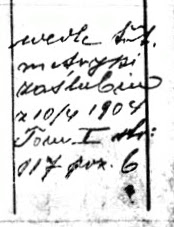
Written in the margin of the birth record for Izak Hersch’s second child is a reference to the date and location of his marriage record. The note states that Izak Hersch registered his marriage to Feige Sand on April 10, 1904 in Rohatyn. The record of this marriage was located in Volume 1, page 17, item 6 of the marriage registry for the Jewish community of Rohatyn. Unfortunately, this volume of marriage records is no longer known to exist. (Source: AGAD300/2461, page 270, item 60)
Feige Sand was the daughter of Naftali Sand, a butcher (rzeźnik), and Scheindel Has, the daughter of Samson, also a butcher, and Etti Has. Feige was born less than a month after Izak Hersch on December 22, 1878 in house number 201 in Rohatyn with the aid of midwife Etel Wandmeyer. Her blessing, given by the same Alter Lewinter who attested to her future in-laws marriage, occurred on December 28th at the synagogue. Samson Silberdrath of Rohatyn served as a witness to the marriage of Feige’s parents and signed the birth record in attestation thus labeling the union as ‘supposedly married’ (rzekomo ślubne) and giving assumed legitimacy to the birth.
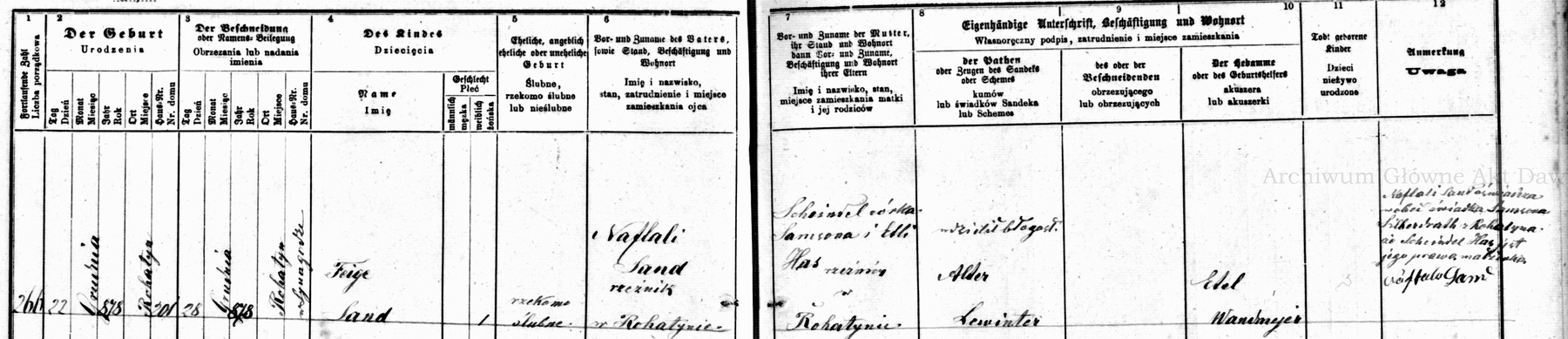
FIRST CHILD – MALE STILLBORN
Prior to registering their marriage, Feige had delivered a male stillborn neonate with the assistance of midwife, Lea Barban. According to the birth record, the stillbirth was delivered on March 30, 1903. However, the death record for the stillborn states the death occurred March 28, 1903, two days earlier than what is recorded on the birth record. Dr. Terlecki certified the cause of death as stillborn (nieżywo urodzony) on March 29th, the date the stillborn was buried in Rohatyn. It interesting to note the difference in dates between these records. One would think that the recording of this event would have taken place on or very close to the date of the event as there would not be confusion. I am open to thoughts on the reason for this discrepancy.


SECOND CHILD – NAFTALI
Naftali Faust was born on April 16, 1904, less than a week after Izak Hersch and Feige registered their marriage. The delivery of the child was assisted by the midwife, Lea Barban. The brit milah took place on April 23rd at the synagogue. Grandfather, Moses Faust, was the Sandek, and Simche Todtfeld was the Mohel. Naftali was named after his maternal grandfather, Naftali Sand.

LIFE OF THE FAMILY OF IZAK HERSCH FAUST
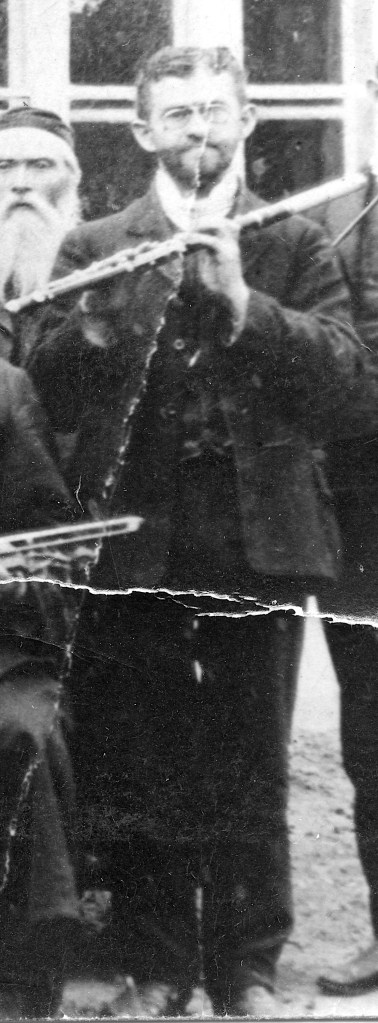
Izak Hersch, more commonly known in our family as Itzik Hersch, played the flute in the Rohatyner Orchestra. According to Izzy Zucker, Izak’s father, Moses, had also taught to him to play the drums. This 1912 photo of him cropped from the larger picture of the band shows Izak holding his flute ready to play. He happens to be the only person among the other musicians in the band including his brothers and father who is pictured wearing glasses at the age of 34. He also stands shorter than his brothers which may have the been the reason he was given the nickname “the imp”. However, there is a story associated with this seemingly unpleasant nickname. When Moses Faust returned to Rohatyn in 1917 after spending two years as a refugee in Russia during World War One having been deported by the retreating Russian Army, he was sick with kidney disease. Moses asked Izak if he could stay in his home but Izak refused. Instead, Izak’s sister, Esther, who was in Vienna during the war, had to return to Rohatyn to take care of Moses. It seems that Esther was not very happy with Izak.
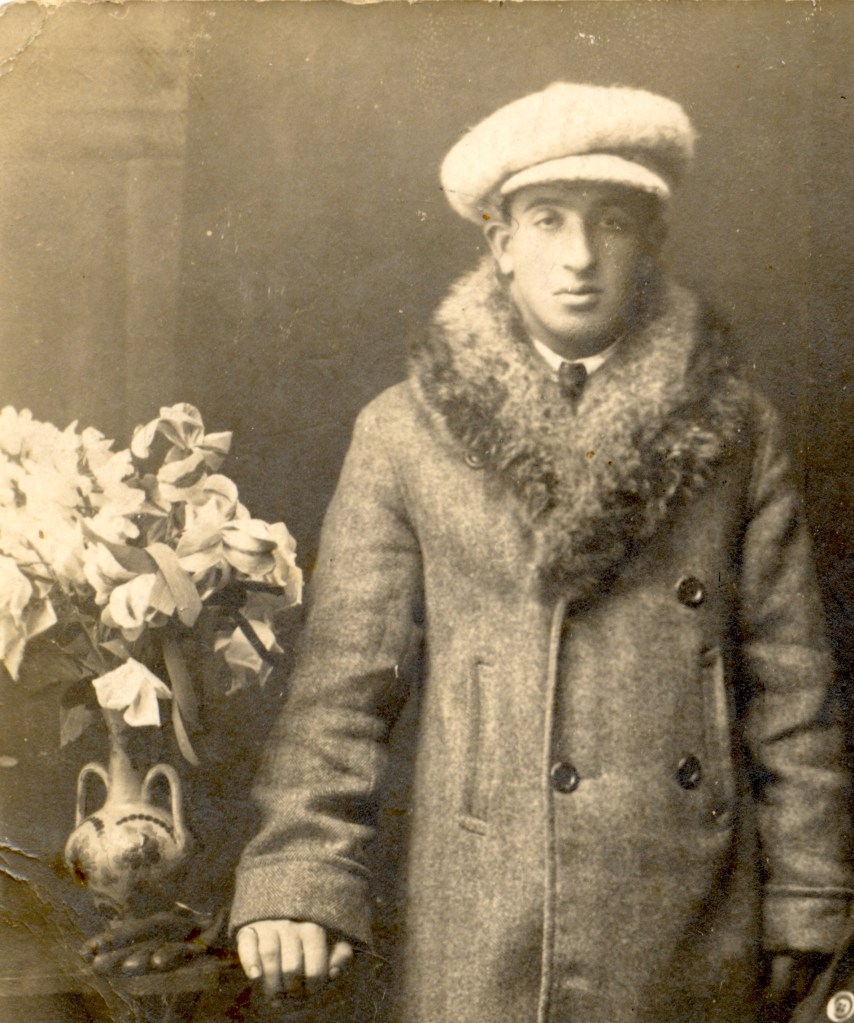
Naftali Faust at the age of 18 dressed warmly for a photograph in 1922. In the May 18, 1930 issue of Chwila, a Jewish Polish-language newspaper published in Lwów, brothers Markus (later Max) Faust and Jack Faust submitted a notice to the paper in honor of their first cousins engagement (Source: Chwila #4002, May 18, 1930 accessed on Libraria.ua)
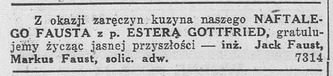
“On the occasion of the engagement of our cousin Naftali Faust to Ester Gottfried, we congratulate him and wish him a bright future – Eng. Jack Faust, Markus Faust, solicitor attorney.”
According to Max Faust, Naftali’s wedding was held on a Tuesday in another town, likely in Zaleszczyki where his fianće Ester lived. Max brought his soon to be wife, Miriam Rothen, to the wedding in a new fur coat. Miriam’s father had recently sent money from the United States for Miriam to buy the coat, and Max wanted people to think that he was marrying a rich woman. To get to the wedding, the Faust family including the musicians and their instruments took a bus from Rohatyn. On the way, the bus broke down. Max got off the bus and flagged down an oncoming car. The driver of the car was none other than the mayor of the town. Max told the mayor they were in need of transportation to get to the wedding or else they would miss it. By sheer luck, another bus arrived and they made it to the wedding in time. The Faust musicians did not play right away. However, later that night, they took out their instruments and played for the next 3 days and nights. Max, who had told his boss that he would be gone for only one day, showed up to work three days later. Before his boss could say a word, Max exclaimed “You’re lucky I am still alive!”.
Prior to the wedding, Naftali had obtained a job with Max’s help working for a lawyer in Rohatyn. However, after the wedding, Naftali and Esther moved to another town, likely Zaleszczyki, and worked for a lawyer there. However, he was not very successful so Naftali and his wife moved back to Rohatyn. This time, Dr. Abraham Sterzer found him a job not as a law clerk but as a messenger.
Outside of work, Naftali was a member of the Jewish Sports Club, Makkabi, of Rohatyn. On November 15, 1937, he joined his fellow members in signing a letter in support of dissolution of the club.

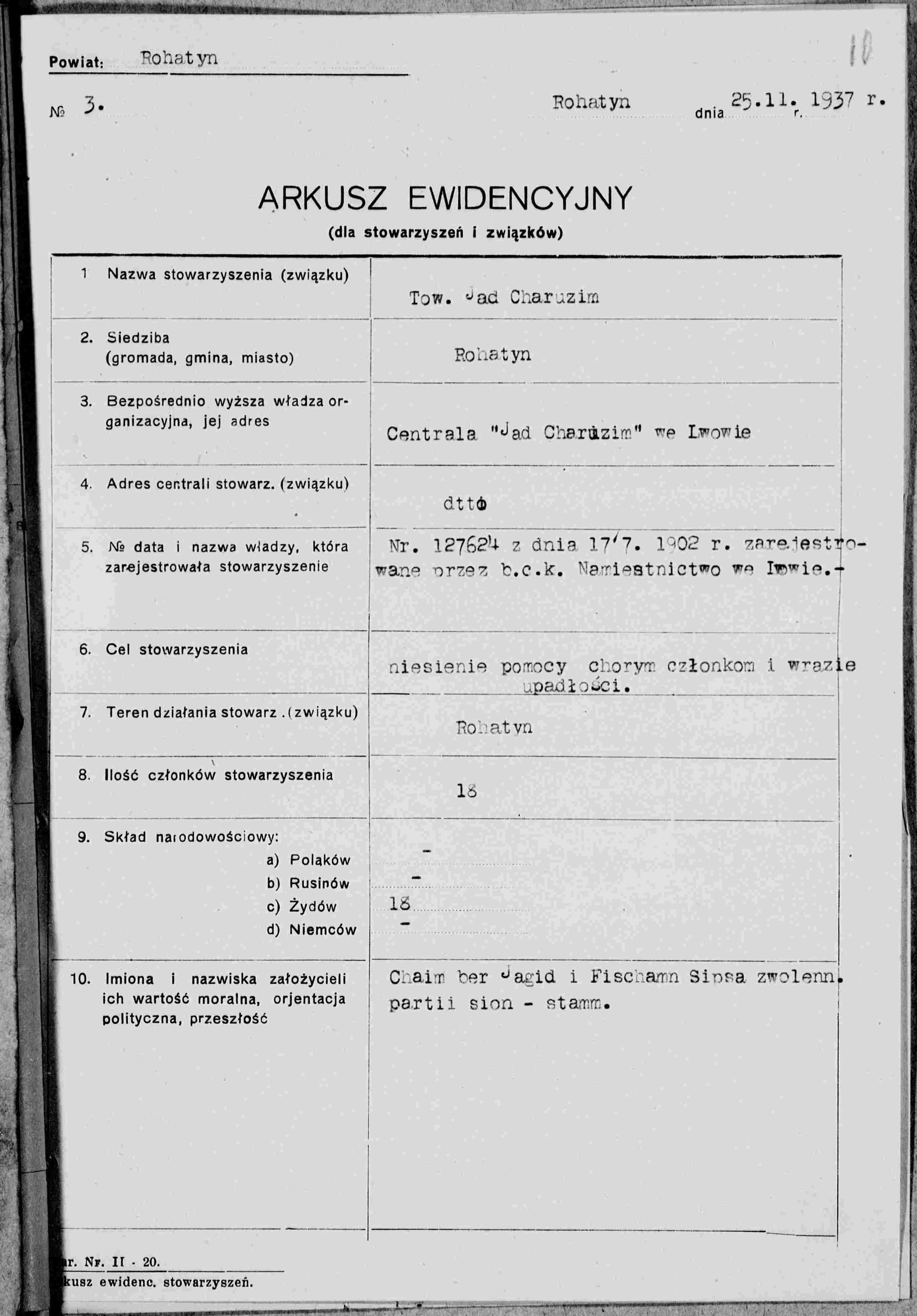
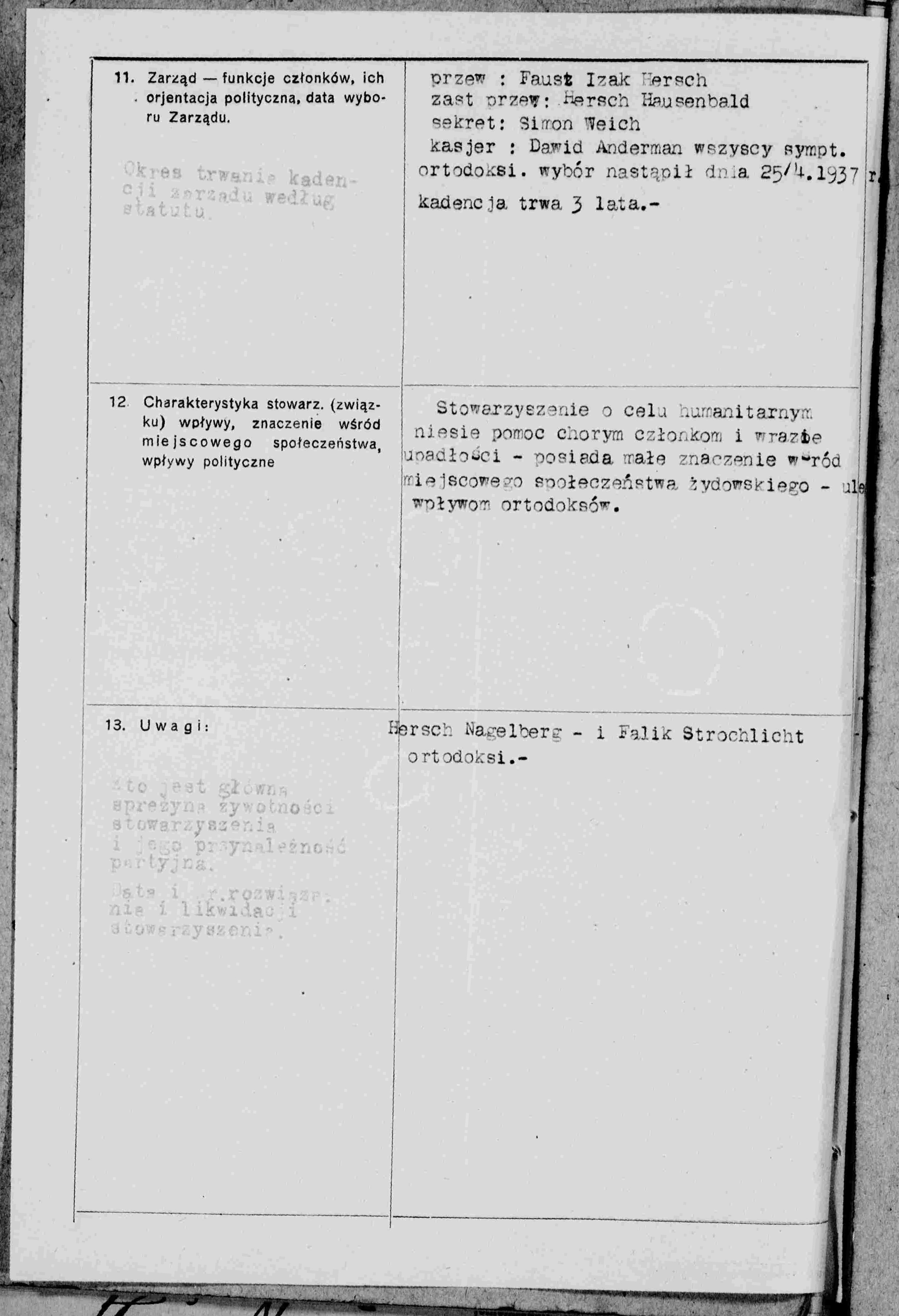
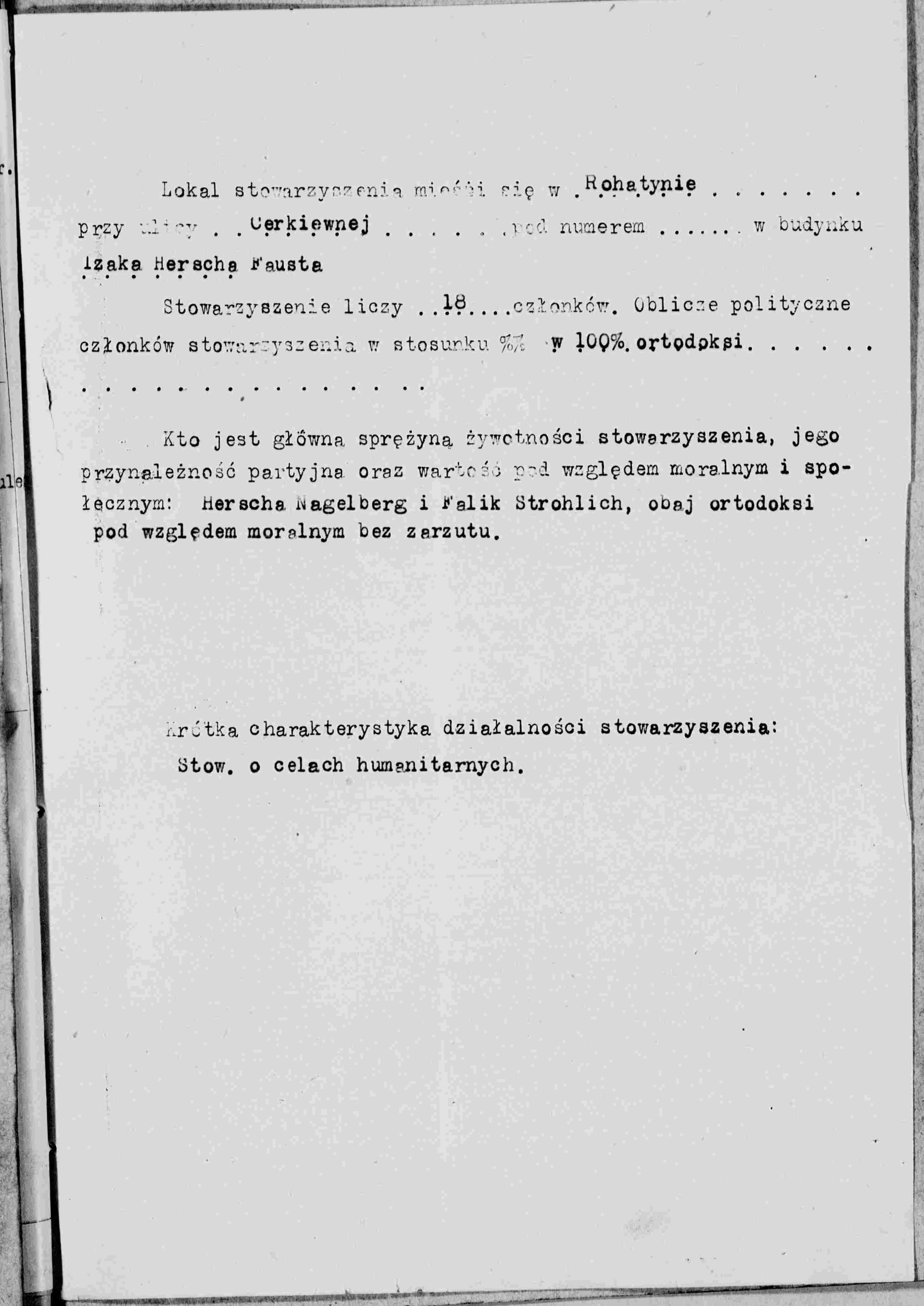
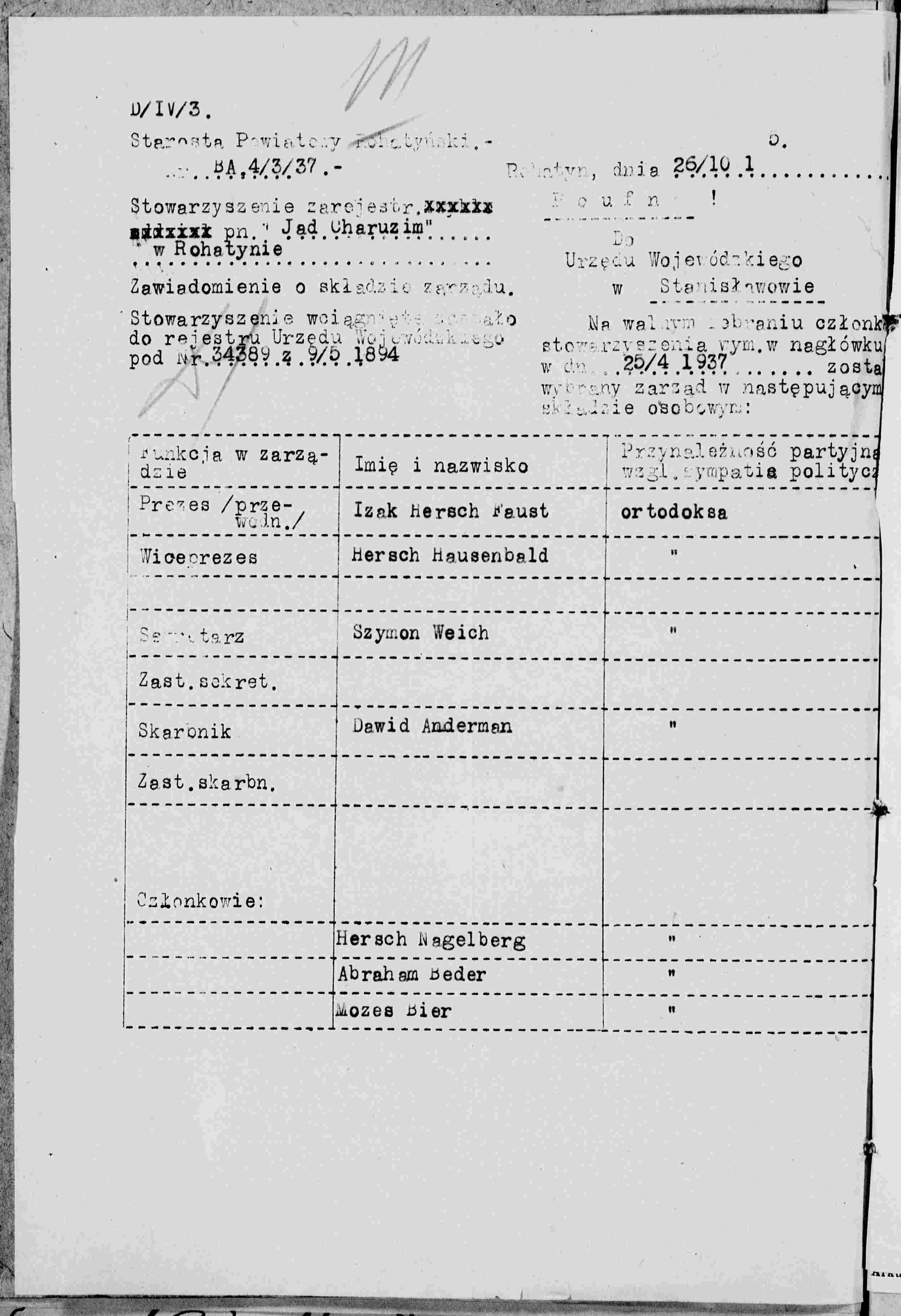
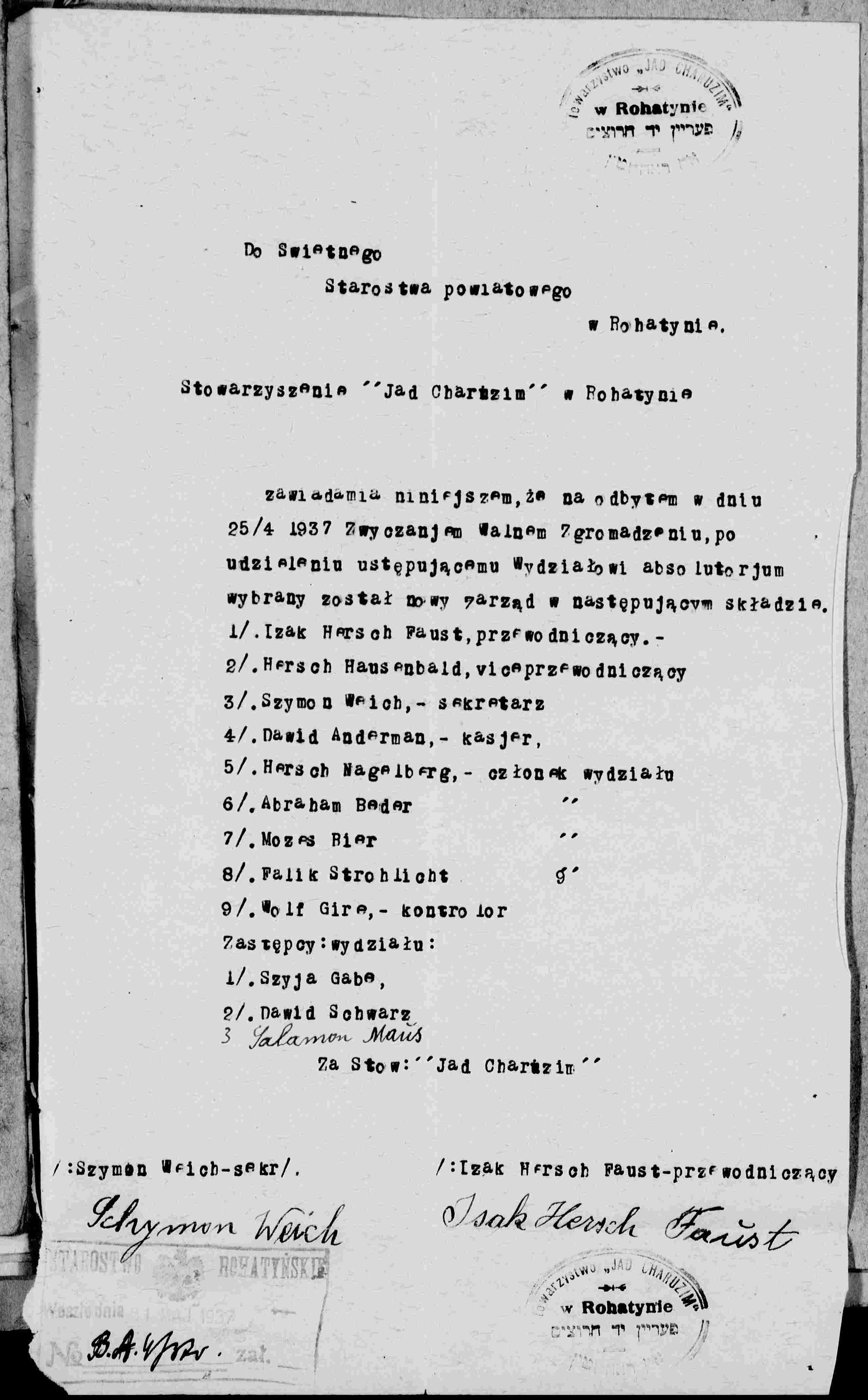
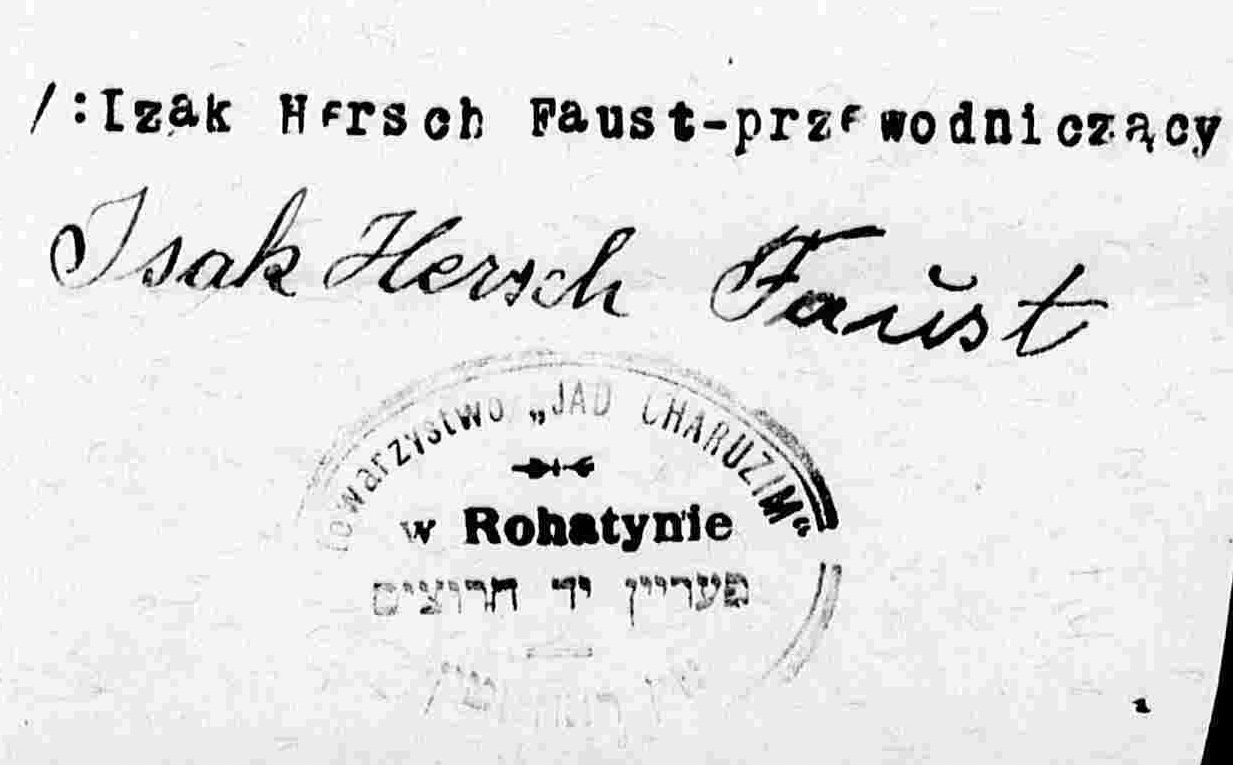
Naftali’s father was also involved in a organization in Rohatyn. On April 25, 1937, Izak Hersch Faust was elected president of the Rohatyn branch of Jad Charuzim, an association of Jewish craftsmen, which was originally established on May 9, 1894. The objectives of the society were to promote the education and knowledge of Jewish craftsmanship through workshops and free apprenticeships, provide grants and loans to small businesses, and support and care for sick members. In addition to Isak Hersch, the board consisted of Vice President Hersch Hausenbald, Secretary Simon Weich, and Treasurer David Anderman. Other members of the board included Hersch Nagelberg, Abraham Beder, Mozes Bier, and Falik Strohlicht. The auditor was Wolf Gire and deputy board members included Szyja Gabe, David Schwarz, and Salamon Maus. Board members served a term of three years. There were 18 members in the association and all were noted to be Orthodox. Meetings were held in a building owned by Izak Hersch on Cerkiewna Street in Rohatyn. The western end of Cerkiewna street starts on the bank of the Gnila Lipa River at the entrance of the Church of the Holy Spirit and runs east past the mikva and ends at the northwest corner of the central square in Rohatyn where the Eastern Orthodox Church is located. It was on this street that the original home of the Faust family, house number 98, was located before being destroyed during World War One. Original documents for the Jad Charuzim organization are located in the State Archive of Ukraine in Ivano-Frankivsk and have been microfilmed by the Center for the History of Jewish People and by the United States Holocaust Memorial and Museum.
FATE OF THE FAMILY OF IZAK HERSCH FAUST
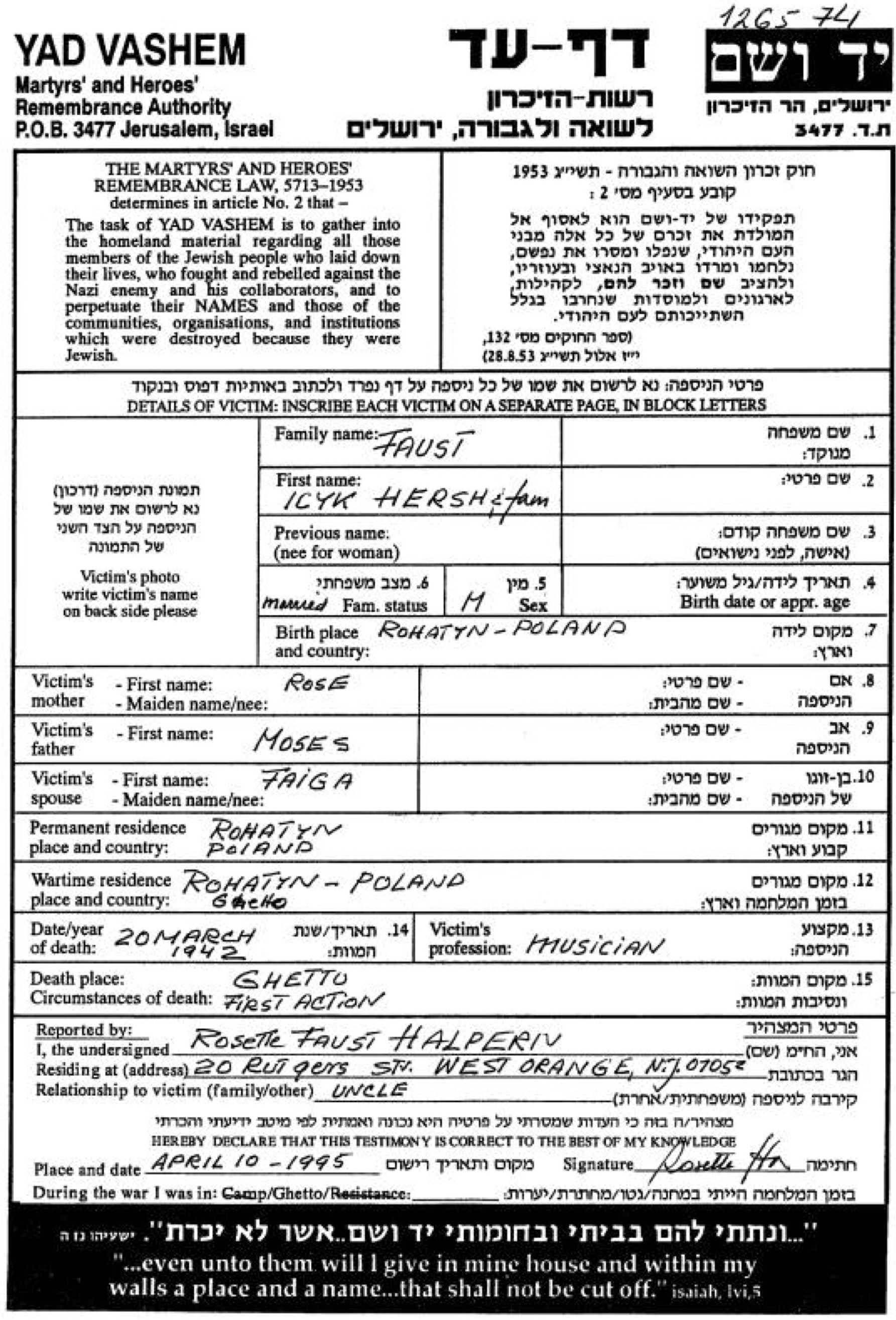
Naftali’s house was situated near the power station in Rohatyn which was located at the intersection of Targowa Street and Kupeleva Street. The home was within the area delineated as the Ghetto during the German occupation of Rohatyn in 1941. Cousin Rosette Faust lived in the house during this period with Naftali and his family. She remembered that her uncle Izak Hersch Faust died from appendicitis in the same house during the occupation. Despite this memory, Rosette had filled out a page of testimony for Izak and his family noting that they perished in the first aktion in Rohatyn on March 20, 1942.
Naftali’s house was later burnt down during the final liquidation of the Ghetto. It is not clear how Naftali, his wife, and his three children perished in the Holocaust. No pages of testimony were written for them. Naftali and his family are listed along with his parents in the necrology section of the Rohatyn Yizkor Book. However, my notes show that Naftali’s wife, Esther, and their children were killed in Rohatyn during the first aktion on March 20, 1942. Another note states Naftali was murdered in Wierzbolowce, a town just outside of Rohatyn, on June 6, 1943.
QUESTIONS:
- What were the names of Naftali’s children?
- Where was the family during WW1?
 Genealogy by Alex


